How to Build a Trellis and Prune a Fleeceflower Root (He Shou Wu) Bonsai? A Full Breakdown of Practical Tips
Many people know that He Shou Wu (fleeceflower root, Fallopia multiflora) is a medicinal plant with multiple functions such as tonifying essence and blood, darkening the hair and beard, strengthening the bones and muscles, and nourishing the liver and kidneys. In fact, it is also an excellent ornamental plant, and its ancient-looking, richly varied tuberous roots, lush vines, and delicate leaves can be used to create bonsai.
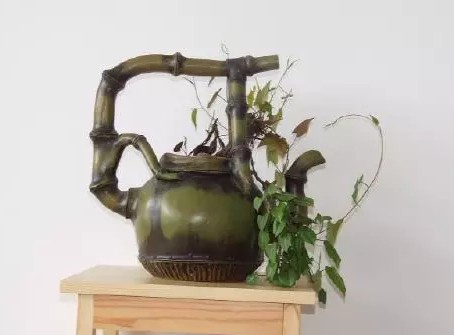
He Shou Wu is a perennial twining vine of the genus Fallopia in the Polygonaceae family. It sheds its leaves in winter in the north, while in the warmer south it remains evergreen all year round. The plant has purple-brown or reddish-brown tuberous roots, mainly oval in shape though other shapes also occur; the vines grow 2-5 m long and are much branched, with the lower parts becoming woody. The leaves are oblong-ovate or ovate with pointed tips, rough on both surfaces, entire, and green or with white veins. The inflorescence is a panicle with small white flowers that open in summer.
After the planted seedlings have established and the stems have grown to 30 cm, build a trellis with branches, bamboo poles, or similar materials and tie the vines to it. Some growers do not set up a trellis and instead interplant with tall crops such as corn. If the stems sprawl on the ground and grow too leggy, cut away part of the leaves in July to improve ventilation and light penetration, which benefits tuberous root growth. Generally, keep only one vine per plant and cut off the extra side shoots; keep branches only once the vine is over 1 m tall, as this helps ventilate and light the lower layers of the plant. If growth is excessive, pinch the tips as appropriate. In field production, prune 5-6 times per year.
For a well-formed He Shou Wu bonsai, repot once every 1-2 years in spring. When repotting, cut away overly long branches and vines, keeping only the basic framework, and cut off decayed, rotten roots to encourage new roots to sprout. The potting soil can be mixed from garden soil, sand, and furnace slag.