Detailed Explanation of Shaping Methods and Techniques for Pomegranate Bonsai
Pomegranate likes fertilizer. When planting, place a few pieces of animal hoof and a small amount of decomposed soybean cake at the bottom of the pot as base fertilizer. Pomegranate has strong adaptability and is not strict about soil; it can grow in both acidic and alkaline soil. Loose and fertile soil is best, but it fears waterlogging. When planting pomegranate bonsai, it is advisable to use a medium-depth or slightly deeper purple clay pot or glazed pottery pot, and pay attention to coordinating the color of the pot with the color of the flowers. The shape of the pot should be determined according to the form of the pomegranate tree.
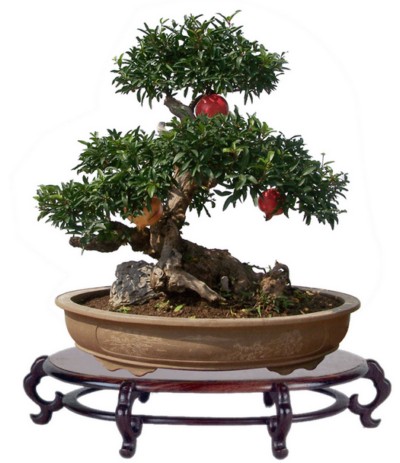
Bonsai can be mainly divided into two major categories, tree stump bonsai and landscape bonsai, according to differences in material selection and processing methods. For example, Zaozhuang Yicheng pomegranate bonsai is mainly tree stump bonsai, with the pomegranate tree as the main subject, and sometimes mountain stones and other materials are also used as accessories to create elegant and peculiar pomegranate bonsai. The main appreciation is the various shaped postures of the pomegranate tree and the characteristics of its trunk, flowers, fruit, branches and leaves. Through artistic processing and careful cultivation such as carving, binding and pulling, twisting shoots, pruning, pinching, bud removal, bark peeling, wounding, and bending, growth and development are controlled over the long term to create a pomegranate bonsai with the momentum of a miniature mountain forest and an ancient, rustic appearance.
The main forms are the following:
1. Upright trunk style: the trunk is towering and straight, elegantly upright, with branching at a height of 20—750px, graceful and free.
2. Slanting trunk style: the trunk leans to one side, branches and leaves are distributed naturally and orderly, and the tree shape has movement within balance, more poetic than an upright trunk form.
3. Curved trunk style: the trunk is twisted, and the tree shape is full of variation, but it should not be bent excessively; if there are too many bends, it instead loses its beauty.
4. Horizontal trunk style: the main part of the trunk lies horizontally on the pot surface, like a tree struck by lightning or blown down by wind, with an old and strange tree shape, full of wild charm.
5. Cliff style: the trunk is gnarled and droops downward, like an old pine or vine growing downward.
6. Withered trunk style: part of the trunk is withered and decayed while the branches and leaves remain lush, like a withered tree meeting spring.
7. Double trunk style: one tree with two trunks; it is best to have one high and one low, one leaning down and one leaning up, for the shape to appear graceful.
8. Combined planting style: two or more pomegranate trees, with diverse varieties, blooming and fruiting, with a distinctive style.
9. Rock-attached style: the pomegranate tree is planted in a crack in the stone, with roots rooted in the pot soil; from a distance it looks like a tree growing on a mountain rock, primitive, natural and vividly picturesque.