Water Change Tips for Hydroponic Plants: How Often Is Best?
In winter the air holds very little moisture, especially in the north, where indoor air is very dry, which is bad for plant growth, so in daily care please spray the leaves with clean water to maintain humidity; you can spray with clean water twice a day.
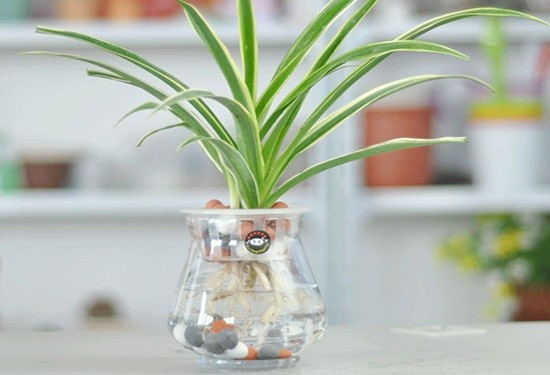
1. At around 20-25°C (spring and autumn), change the water once every 10-15 days. When the temperature is low you can extend the interval appropriately, and when the temperature is high you should shorten it.
2. When fish and plants are kept together, change the water more frequently. It is best to buy a micro air pump with very low power consumption of about 3 watts and aerate it appropriately; this can greatly extend the water change interval (generally water can be changed once every 1-2 months).
3. Tap water can be used, but it is best to let it stand for one to two days. Mineral water or purified water can also be used directly. The temperature difference between the original water and the new water should not be too great. Mix a 6ML sachet of nutrient solution into the clean water in a 2.25L large cola bottle before use. For a 300ML bottle of nutrient solution, mix one bottle cap of the concentrate into the clean water in a 2.25L large cola bottle before use. The diluted nutrient water has a shelf life of 6 months; keep it away from sunlight in normal storage.
4. Due to root adsorption, metabolism and algae activity, after a period of time the root surface will be covered with foreign matter, which can be carefully rinsed off with water when changing the water. Any old, dead roots should be removed when changing the water.
5. Do not put too much water in the bottle; it is best to immerse about 2/3 of the root length in the water.
6. When the winter temperature is below 10°C and in midsummer when it is above 35°C, you should reduce the concentration of the nutrient solution used (generally to 1/3-1/2 of normal) or grow the plants in clean water only.
Each time you change the water, rinse the plant roots and container with clean water, and prune dead branches, withered leaves and rotten roots. Under normal growth conditions, hydroponic plants will periodically rot part of their roots and then grow new ones, so when you find rotten roots, do not panic at first; just use sterilized scissors (disinfected with alcohol cotton) to trim off the rotten roots. Sometimes you can also trim off some old roots to promote the growth of new roots (note: this should be done under the guidance of a professional). But be sure not to damage the water roots, otherwise the growth of the plant will be affected.
Changing the water for hydroponic plants is very simple; as long as you master the procedure, you can easily replace the waste liquid and give the plants a new living environment. The water change process requires considering the timing of water changes for the plant, which is generally a fixed interval; the second is cleaning the plant roots and container; the third is paying attention to the water depth. Let us explore these three issues together.
1. Water change timing:
Generally, a water change interval of 5-7 days is suitable. But water changes depend on the season; for newly hydroponically grown flowers, change the water once every 1-2 days. In summer, plants grow vigorously and the temperature is high, so the water easily spoils and the interval should be shortened. In winter, most plants are in a semi-dormant or dormant state and the temperature is lower, so the water change interval can be longer. Overall, a shorter water change interval is beneficial to plant growth.
2. Cleaning the roots and container:
When changing the water, the roots should be cleaned; you can use clean water to rinse off the mucus on the roots, and cut off some rotten roots and old roots that have lost their absorbing capacity. After a container has been used for a period of time, some sediment will adhere to its walls and algae is also likely to grow, so it should also be cleaned thoroughly when changing the water.
3. Water depth:
When growing flowers hydroponically, people often immerse the roots in water, but this method is not appropriate. It is best not to add too much water: immerse most of the roots in the water and leave a small number of roots exposed to the air, so that the roots can both absorb dissolved oxygen from the water and absorb oxygen from the air.
The roots of hydroponic plants: those white, tender roots on top are the water roots. Some grow directly from the base of the stem, and some grow from the main root; they are all responsible for the plant's absorption function, so be sure not to damage them.