How should camellia seeds be treated when sowing potted camellias
When camellias are grown in pots, especially outside their native regions, they generally rarely set fruit. Seeds capable of germinating can only be obtained under conditions where the flowers are single or have a low degree of stamen petalody, the pistil develops normally, artificial supplementary pollination is carried out, and the temperature and humidity are suitable.
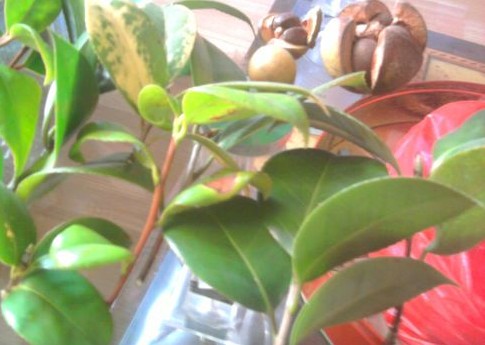
When the capsule turns slightly red and splits, the fruit can be picked, and the seeds removed promptly. To test whether the seeds are capable of germinating, they can be placed in a container filled with clear water. If a seed floats on the surface, it means the seed is empty and shriveled with no kernel, and will not germinate after sowing; if the seed sinks in the water, it means the seed has a plump embryo and can germinate and produce seedlings. Because camellia seeds have a relatively high water content, if they are dried and stored directly after being removed, the seeds will lose water and rapidly lose their germination capacity. A more practical method is:
After scooping the seeds out of the clear water, store them in fine sand of moderate dryness and moisture; the suitable water content of the sand is such that it forms a ball when squeezed in the hand and falls apart when released; by February to March of the following spring, when the seeds crack open and the radicle emerges, they can be sown in loose, fertile potting soil or a seedbed. In areas south of the Yangtze River, they can also be sown as soon as they are collected in an open-air seedbed, with soft grass or pine needles added in winter to keep them warm and moist, which likewise serves to promote germination, and the germination rate is higher than that of spring sowing.
Seedling camellias grown from seed grow slowly in the first 1 to 2 years, and their growth speeds up after 3 to 4 years. They usually take 4 to 8 years or longer to bloom. Therefore, in commercial cultivation, only cutting or grafting methods are generally used to propagate seedlings, but hybrid breeding of camellias cannot be done without propagating seedlings by sowing.
In early and mid-October, place the harvested fruits indoors in a ventilated place to dry in the shade. After the capsules split, take out the seeds and sow them immediately. If they cannot be sown immediately in autumn, they need to be stored in sand until sowing in February of the following year. Generally, autumn sowing has a higher germination rate than spring sowing, and is suitable for single or semi-double varieties. The seeds mature in mid-October and can then be sown. Shallow sowing is preferable; use vermiculite as the substrate, cover with 6 mm, keep at room temperature of 21°C, and provide 10 hours of light each night, which can promote seed germination. Germination begins 15 days after sowing, and within 30 days the seedlings reach 8 cm in height. Transplant when the seedlings have 2 to 3 leaves.