What are the common misconceptions about fertilizing camellia bonsai?
Many people like to grow flowers at home, as it beautifies the room, purifies the air, regulates temperature and cools the heat, and also cultivates character and pleases body and mind. However, to make potted flowers flourish with lush branches and large, brightly colored blooms, besides watering, fertilizing is also an important part of the flower-growing process. When flowers are in their growth period, fertilizing can promote vigorous growth, so more fertilizer should be applied; when flowers are in their dormant period, potted flowers grow slowly, so less fertilizer should be applied.
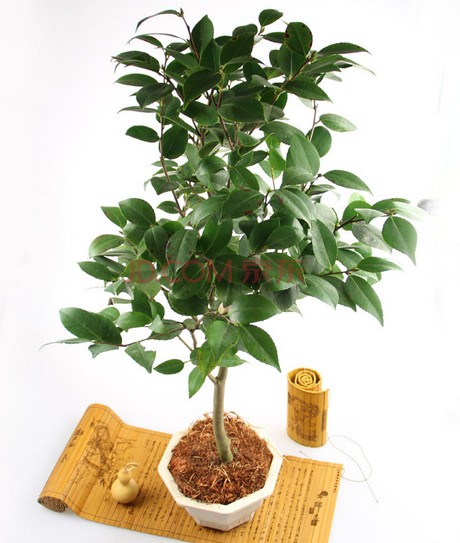
I have seen quite a few topics online related to camellia fertilizing, and many people have put forward their own various views on fertilizing camellia. Some views are quite objective, practical and fairly scientific, but quite a few others - I do not know whether it is ignorance or prejudice. I have listed them out, and there are roughly the following views:
1. Do not fertilize when new branches are sprouting, on the grounds that it may burn the roots and affect the sprouting of new branches;
2. Do not fertilize in hot seasons, on the grounds that seedlings are easily burned in hot seasons;
3. Do not fertilize after flower buds show color, on the grounds that it may cause bud blast and bud drop;
4. Do not fertilize during the flowering period, on the grounds that it will shorten the flowering period and cause flowers to drop;
5. Do not fertilize in winter, on the grounds that plants do not absorb fertilizer applied in winter, so it is a waste.
There are other views that I will not list one by one. These few are relatively representative. Below, based on my own shallow understanding of camellias and fertilizers, I will use my own views to talk about what I think of the above views:
1. Do not fertilize when new branches are sprouting, for fear that burning the roots will affect the sprouting of new branches. May I ask: when new branches are sprouting, must the fertilizer concentration really be used at a level that burns the roots? Is it not possible to use a lower concentration and a smaller amount? Or is it that you yourself are afraid you cannot control this concentration well and therefore dare not use it? If it is the latter, is it not absurd to confuse "dare not use" with "should not use" or "cannot use"? If this plant was originally lacking fertilizer, would you also not use it when new branches are sprouting?
2. Do not fertilize in hot seasons, because seedlings are easily burned in hot seasons. High temperatures making fertilizer burn seedlings is a huge misunderstanding. Under high temperature conditions, fertilizer transforms somewhat faster and volatilizes easily, but it will not burn seedlings because of this. At the concentration normally used, using the same concentration in hot seasons will still not burn seedlings. What is noteworthy is that in hot seasons the soil moisture of the pot must be well managed, and it should not be allowed to become too dry. If you are afraid of burning seedlings, the concentration can be lowered a little.
3. Do not fertilize after flower buds show color, on the grounds that it may cause bud blast and bud drop. Although the time I have spent with camellias is not very long, it is not very short either - exactly 20 years, neither long nor short. I have seen quite a few various diseases and problems in camellias, and I have even encountered things I could never have imagined even in dreams. Yet this "bud blast" I have really never encountered. As for its cause, I still dare not make a reckless judgment; to say it is related to fertilizing, I for one dare not agree for the time being. Because of this matter, I once carried out destructive experiments for two consecutive years (the first year using chemical fertilizer, the second year using decomposed chicken manure) (using 2~3 times the usual amount when flowering had just begun), and as a result I did not find a single bud blasted, and the flowers were both large and gorgeous. Therefore, I personally believe that "bud blast" should have another cause. If bud drop in camellias is caused by fertilizing, then it must certainly be due to fertilizer damage. After fertilizing, provided there is no fertilizer damage, buds absolutely will not drop. If there is bud drop, there must certainly be another cause unrelated to fertilizing (there are many causes of bud drop: plants too weak, too many buds retained, long periods of rain and lack of light, freezing damage, pest and disease damage, and so on can all cause bud drop.).
4. Do not fertilize during the flowering period, on the grounds that the flowering period will be shortened and flowers will drop. Will fertilizing during the flowering period cause flowers to drop? The reasoning is the same as in point three: as long as no fertilizer damage is caused, flowers absolutely will not drop. Here I will talk about "the flowering period will be shortened." Anyone with a bit of common knowledge should be clear that the length of the camellia flowering period should first be related to the characteristics of the variety; furthermore, it is directly related to the good or bad weather and the high or low temperature at flowering time; the strength or weakness of the plant also matters; pests and diseases also have a certain relationship. In any case, apart from the factor of fertilizer damage, based on my shallow understanding of camellias and fertilizers, at least at present I can find no theoretical basis for the idea that fertilizing during the camellia flowering period shortens the flowering period.
5. Do not fertilize in winter, because plants do not absorb fertilizer applied in winter, so it is a waste. If one does not have a bit of professional knowledge, this issue is really easy to be misled about. If one knows what kind of process fertilizer goes through from being applied into the soil to being absorbed by plants, it becomes very clear. After fertilizer is applied into the soil, the vast majority is adsorbed and fixed by the soil and becomes poorly soluble fertilizer, and only a very small part is absorbed by plants. Some fertilizers cannot be directly absorbed by plants and need to be transformed before plants can absorb them. The release of the poorly soluble fertilizer fixed by the soil is, under the action of physical, chemical and microbial factors, extremely slowly weathered, decomposed and transformed into water-soluble fertilizer, and only then can plants absorb it. Strictly speaking, fertilizing in winter is not for directly letting plants "eat" it, but for preparing for the coming spring, temporarily placing it in the "warehouse" (the soil), so that when the temperature rises the following year the plants can "eat" the fertilizer at any time.