Detailed Explanation of Techniques and Methods for Shaping and Styling Begonia Bonsai
Begonia shaping and processing often combines wiring and pruning, and the processing period is best from after leaf drop in winter to before bud break in spring.
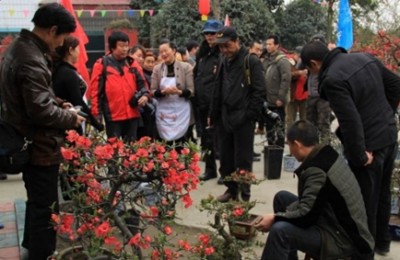
During the plum rain period, new branches have grown relatively mature and the branches are quite flexible, so it is also suitable for pruning and wiring. Seedlings 2 to 3 years old can begin to be processed; at this stage they are highly malleable and easier to work with. It is best to use both palm fiber and metal wire; the trunk and large branches need appropriate wiring, while all small branches should be shaped entirely by pruning.
It is best to prune the branches and leaves into a natural tree crown, and not to wire them too regularly. Malus spectabilis 'Plena' grows relatively quickly, so palm fiber and metal wire should be removed in time to prevent harm to the tree. It can be processed and made into many styles, such as slanting trunk style, curved trunk style, waterside style, cascade style, double trunk style, and multiple trunk style.
1. Processing
Malus halliana is best shaped with palm fiber wiring combined with pruning. However, care must be taken to remove the palm fiber in time, otherwise it easily causes the “wire embedding” phenomenon, affecting both appearance and tree growth. The processing period is best during the dormant season, and it can also be done after flowering.
2. Tree shape
The tree shape of Malus halliana bonsai is best made as slanting trunk style, curved trunk style, cascade style, and so on. The branches should be upright, elegant, and spreading, with attention to appropriate spacing between dense and sparse areas, so as to promote abundant flowering branches, delicate and colorful flowers, and enhance the ornamental effect.