A detailed guide to the seedling and cultivation methods of pennywort bonsai, easy enough for beginners to learn
Pennywort (Hydrocotyle vulgaris) is not strict about water quality and can be cultivated in freshwater with lower hardness; salinity should not be too high. The pH of the water is best kept between 6.5 and 7.0, that is, slightly acidic to neutral. It has a relatively high demand for fertilizer, and during the vigorous growth stage it is enough to apply fertilizer once every 2~3 weeks. If planted in a pot or container, then only a small amount of fertilizer is needed, such as a quick-acting fertilizer - Hyponex No. 2, or a slow-release fertilizer - Magic Fertilizer (which can maintain fertilizer efficacy in water for a long time).
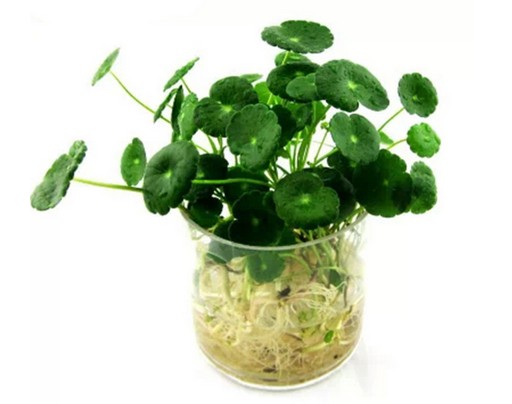
Pennywort likes an environment with sufficient light, and in a shaded environment the plants grow poorly. It grows well under full sun; under half-day sun its leaf stalks will stretch longer and grow toward the light, and its posture will need slight adjustment to look more beautiful. It is best to let it receive 4~6 hours of scattered sunlight every day; using a dedicated fluorescent lamp and giving the plant 8~10 hours of artificial light every day also allows it to grow normally. It likes warmth and fears cold, grows well within a temperature range of 10~25°C, and the overwintering temperature should not be lower than 5°C. Under good management conditions, pennywort is not prone to disease and is also less affected by harmful animals.
This plant is perennial, and it sprouts quickly and takes shape relatively fast. Without repotting, a shaped plant should not be continuously cultivated for more than 2 years, otherwise the growth of the cluster will become weaker and weaker.
This plant is mainly propagated by division or cuttings, mostly carried out from March to May each year. Cultivation is easy; keep the cultivation soil moist, and roots will develop in about 1~2 weeks. Sowing can also be used for raising seedlings. For the soil, a mixed substrate made of leaf mold, river mud, and garden soil can be used, with their proportions by volume in order being 0.5:2:2.
For potting, this can be done once the pennywort seedlings have taken shape. A medium-sized flowerpot without drainage holes is often used as the planting container. To obtain a better ornamental effect, 1 seedling can be placed in each pot, and after the operation is finished, simply water it. To make it easier for the seedlings to recover, the planting operation is best carried out on a cloudy day.