Detailed explanation of Serissa bonsai styling techniques to help you create a beautiful bonsai
Serissa is often propagated by division in March of spring, and branch cuttings or root cuttings can be done at any time from February to October. If protected cultivation (seedbed) is used, cuttings can be taken from November to January of the following year. After cuttings, pay attention to shading, heat preservation, and moisture retention; the survival rate is very high. 2-3 year old seedlings can begin to be shaped. This is often done from after half-leaf fall in winter to before bud break in spring. The trunk and main branches are trained with wire, and the small branches are shaped by fine pruning.
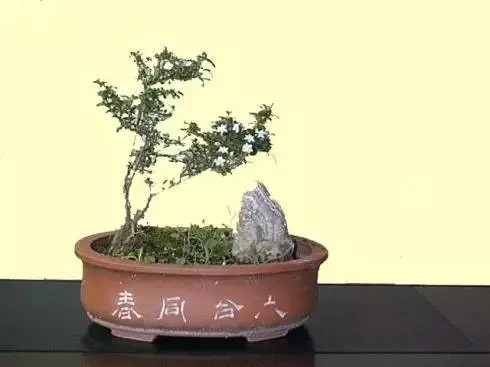
The branches of Serissa are soft and easy to bend, but it takes a relatively long time to set their shape. It usually takes about 2-3 years before the training material (that is, the wire) can be removed. It is best to retrain and reshape several times to set the form, in order to prevent the wire from cutting in and affecting plant growth and the beauty of the tree shape. In the southeastern and central provinces and regions of our country, you can also dig up wild old stumps or young trees in the mountains and fields, and after field planting to "cultivate the stock" until they survive, process them and pot them.
Serissa branches are soft and easy to train and shape.
Potting:
Every year in March-April, before Serissa enters the peak growing season, pot it. For the pot used, it is generally better to choose a relatively narrow and long one, such as a rectangular or oval purple clay pottery pot or glazed pottery pot. A slightly darker color is better. The potting soil should be loose, well-drained neutral or slightly acidic soil rich in organic matter.
Shaping:
For shaping Serissa, the method of coarse wiring and fine pruning is commonly used. The trunk is formed into an irregular "S" shape. The side branches are pruned into flat pads by fine pruning. Serissa has strong sprouting ability, tolerates pruning, and has many fibrous roots, so it can also be made into bonsai styles with strict root requirements, such as exposed-root style, root-on-rock style, cascade style, or connected-root style.
If you want to speed up the production process, you can use Serissa to make small bonsai. Due to the issue of time, the stump bonsai looks relatively young and tender. To make up for this shortcoming, you can work on the shaping and make it into a small and exquisite bonsai.