Detailed Explanation of Seedling Cultivation Methods and Technical Key Points for Serissa Bonsai
Serissa bonsai can be propagated by cuttings or division. Division means obtaining new individuals by separating the suckering shoots of Serissa, usually carried out in March in spring. Propagation is mainly by cuttings, and natural old stumps can also be used.
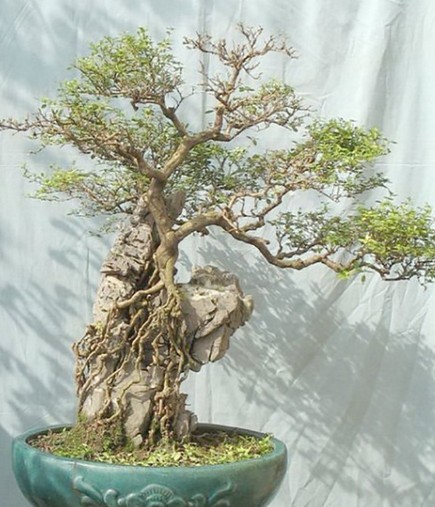
Cuttings can use softwood or hardwood. Softwood cuttings are taken in early summer each year, with semi-lignified branches selected as cuttings, about 8 cm long, generally with 3-4 buds; hardwood cuttings are taken in February-March each year. Dormant branches are used as cuttings, with 3-4 buds per cutting. Serissa cuttings root easily and produce large quantities, so this method is mostly used to obtain seedlings in mass production.
Cuttage propagation method:
Dormant branch cuttings are taken from February to March, semi-mature branch cuttings from June to July. Generally, hardwood is used in early spring, but in the plum rain season, either hardwood or old branches can be used, and shade frames are needed in all cases. After inserting, pay attention to watering and keep the seedbed moist; they root very easily. When making small or miniature bonsai, to encourage them to take shape as quickly as possible, in the plum rain season of June-July, take perennial branches with graceful posture and a large-tree form, cut the lower cut into a horseshoe shape, insert into vermiculite or sand, cover with film to keep warm, mist with water, and they can root in about 40 days. At this point, transplant them, and with slight binding and pruning they can take shape. Because this plant is easy to find in the mountains and wilds everywhere, some flower growers often dig it directly from the woods and pot it up.
Broadcast cutting method:
Use vacant green space, loosen the soil, break up clods, and level it. Evenly scatter the trimmed one-to-two-node (about 3 cm) branches over the previously prepared ground, press the surface soil firmly with feet or weights, and water thoroughly. After that, spray water once every other day, and rooting and sprouting of branches and buds begin after 10 days. After 25 days, apply the first dilute liquid fertilizer. At 50 days, apply a 1:1000 urea solution once to promote seedling growth. After 2 months, they can be transplanted and planted out. After 4 months, they can be potted for cultivation, and initial cuttings can also be done at the same time. After 1 year, a relatively ideal stump bonsai with exposed roots can be formed. Used as a hedge, it takes shape in just half a year.