How to fertilize a ginkgo bonsai? Master these techniques for stronger growth
Ginkgo is a tree species with a very long history, and since ancient times in our country it has been regarded as an excellent choice of material for bonsai. Ginkgo bonsai can be divided into three types: foliage-appreciation, fruit-appreciation and trunk-appreciation. To make a ginkgo bonsai, choose root-sucker seedlings from beneath large ginkgo trees and stalactite branches of ginkgo trees, use various methods to wire and bend the branches and trunk during the growing season of the ginkgo stump, and then simply pay attention to timely pruning and reasonable watering and fertilizing. Below, I will share some fertilizing techniques for ginkgo bonsai with fellow bonsai enthusiasts.
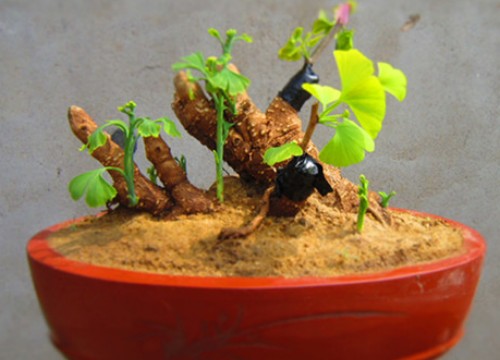
Because a potted ginkgo is limited by its container, root growth is inhibited, so the limited potting soil must contain sufficient fertility to maintain the ginkgo's needs for growth and fruiting. Select loose, fertile garden soil and sieve it, add one third fully decomposed organic fertilizer (such as compost, barnyard manure, green manure, etc.), mix in one fifth crushed plant straw, moisten the above materials with 5% human waste or 1% urea water solution until the moisture level is such that it forms a ball when squeezed in the hand and falls apart when the hand is released, then place it in a sunny spot to pile up, cover it firmly with plastic film, and ferment it at high temperature for 15 to 25 days.
Apply base fertilizer every winter, and it must be organic fertilizer, such as decomposed soybean cake or barnyard manure. During the vigorous growth period between spring and summer, it is advisable to frequently apply dilute cake fertilizer water or rotted human waste, in order to promote the growth of branches and leaves and keep the leaf color fresh green.
When buds break in early spring, apply a bud-promoting fertilizer mainly composed of nitrogen fertilizer; at full bloom, spray a 0.1% borax solution; after flowering, during the fruit-swelling period, fertilize mainly with phosphorus and potassium fertilizers. Fertilizing a potted ginkgo should be done in small amounts and frequently, which both prevents root burn and allows full absorption.