How to shape a ginkgo bonsai? A full analysis of practical techniques
Choose a suitable clay pot, fill it with coarse and fine soil, and plant the stump in the pot between February and March. During the growing period, bind the branches into curved or straight, slanting or upright, or upward or downward shapes, and control the direction and orientation of their extension well.
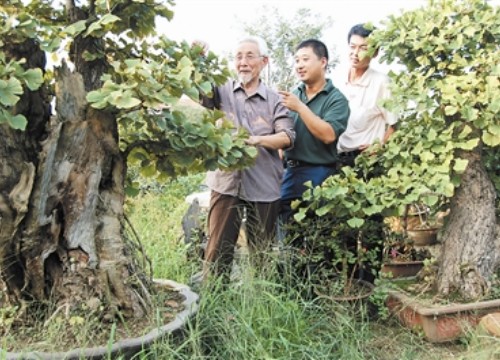
The preliminary form is the foundation for making a bonsai. To work the preliminary form, the method is to use various methods during the growing season of the ginkgo stump to wire and bend the branches so that they are curved or straight, slanting or upright, or downward or upward, and to establish the direction of extension on schedule.
When making the pads, if a branch is too long and you want to bend it into a spiral shape, then from the start you need to use the palm-fiber wrapping method, carrying the palm fiber along the branch. After making the pads, one palm-fiber wrap follows another without cutting the palm fiber, which is called continuous palm fiber.
But do not stick rigidly to one palm-fiber method; instead, adapt to each stump and flexibly use various palm-fiber methods such as yang palm fiber, pie palm fiber, base palm fiber, mixed palm fiber, hand palm fiber, hanging palm fiber, lower palm fiber, and seam palm fiber. Because ginkgo leaves are relatively large, you need to be very careful when wiring and bending, and must never go too close to the stump head. Otherwise, it will affect the appearance of the stump head and reduce its artistic value.