How to shape a Chinese pistache bonsai? A full analysis of practical techniques
The wood of the Chinese pistache is hard in texture and fine in grain, and can be used for construction, farm tools, furniture and carving. Its crown is tall and rounded, and its leaves are slender and graceful; after autumn the leaves turn bright red and the fruits are blue and red intermixed, so it can also serve as an ornamental greening tree for cities. Its young leaves can be made into tea, and its bark and stems can be used as medicine.
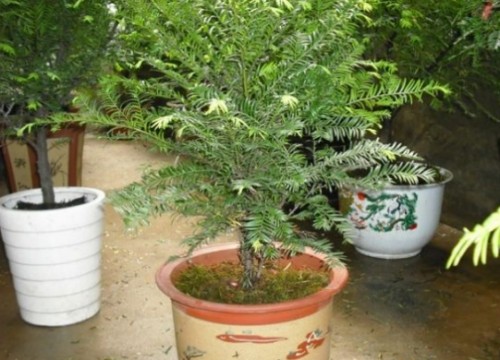
Shaping a Chinese pistache bonsai is best done in April of the spring of the year after potting. A naturally grown Chinese pistache has a spherical crown, whereas a potted Chinese pistache, because it needs repeated pinching of the growing tips and height restriction for dwarfing, grows longer and more luxuriant side branches; based on this characteristic, the side branches can be twisted and wired.
Generally, 4 to 5 tiers of side branches are kept on the trunk; the natural crown should be imitated, and the growth vigor and angle of the side branches in each tier adjusted so that the lower side branches grow diagonally, the middle side branches are basically horizontal, and the upper side branches extend diagonally upward. Combined with light pruning according to the tree form, this lets it grow into a spherical shape close to, but far larger than, the crown-to-trunk ratio of a naturally growing tree, producing a well-proportioned and tasteful natural-style bonsai.
You can also design a pattern according to the growth form of the seedling, creating momentum from the stump and seeking the shape from the pattern, with order in the curves and straight lines, shaping it into postures such as the slanting-lying style and the curved-trunk style. By early summer, wire the new branches again and further shape them with pruning.