Detailed Explanation of the Key Techniques for Styling Osmanthus Bonsai
Generally speaking, osmanthus is widely planted in the Huaihe River basin and areas to its south. Its suitable growing range extends north to the lower reaches of the Yellow River and south to Guangdong, Guangxi and Hainan. However, osmanthus can also be grown in Beijing and Qingdao.
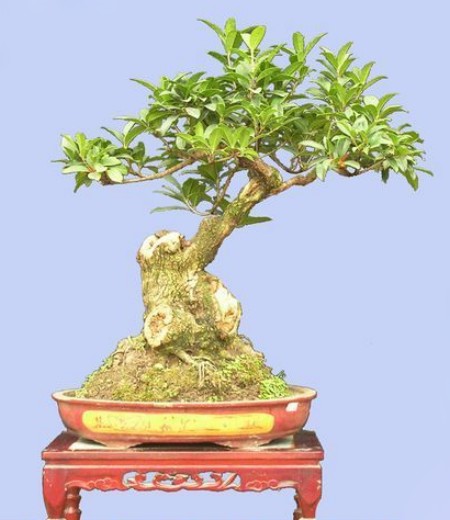
The styling of osmanthus bonsai depends on the tree. Once the main framework is set according to the tree's posture, remove other root suckers, overly dense branches, water sprouts, crossing branches and diseased or weak branches to improve ventilation and light penetration. For trees that are strong at the top and weak at the bottom, the upper branches can be cut back by 1/3 to make the overall tree vigor strong and healthy. At the same time, apply wound healing and antiseptic membrane to the pruning cuts to protect the wounds.
Processing:
Osmanthus has strong sprouting ability and tolerates pruning well. One to two years after potting, carry out processing and styling during the plum rain season or after flowering in autumn, using a combination of bending and wiring with pruning. The trunk can be bent and wired into a curved-trunk form or a slanting-trunk style; if the trunk is relatively tall, it can be appropriately cut back so that new branches and trunks sprout from the base, preventing the lower part from becoming bare, or heavily prune the upper branches and overly dense branches to stimulate new branches to grow from the lower part of the trunk, maintaining balance between top and bottom and making the tree shape attractive with lush flowers and foliage.
Tree shape:
For osmanthus styling, curved-trunk, slanting-trunk or flowing/elegant styles are best. With the tree extending at a slant, dense branches and foliage, and an antique, natural look, it is most enjoyable to admire. When in bloom, its rich fragrance fills the air and refreshes the heart.