Detailed Explanation of Gardenia Seed Sowing and Cultivation Methods
Generally, select plump, deep-red ripe fruits, dry them in the sun or in the shade with the husk still on to use as seed. Before sowing, cut open the seed husk with scissors, dig out the seeds, rub them apart in hot water, remove floating seeds or impurities, then scoop out the sunken, plump seeds, spread them on a bamboo mat, and place them in a ventilated spot to dry off excess moisture.
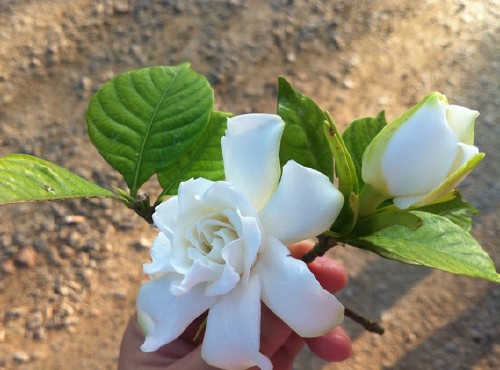
Generally, choose a sunny hillside or earthen plot with deep, loose, fertile sandy loam for sowing. You can plant along field edges and corners, or interplant or relay-crop with legumes. Before planting, plow the land 1-1.5 chi deep, remove stumps of miscellaneous trees and shrubs, and build beds with a bed surface width of 4-5 chi (the better the soil, the wider the spacing can be; otherwise make it narrower), with a bed height of 6 cun. You can apply farmyard manure, green manure, or human and livestock manure water as a base fertilizer; for example, apply 20-30 dan of human excreta per mu. After the soil dries, shallowly rake the clods and level the bed surface. On the bed surface, open sowing furrows at a row spacing of 6-7 cun, with a furrow depth of about 1 cun, ready for sowing.
Gardenia can be sown in spring or autumn, generally mostly in spring. For spring sowing, sow around Yushui; for autumn sowing, sow around Qiufen. When sowing, mix the seeds with wood ash and sow them evenly in the sowing furrows, then cover and level the sowing furrows with fine soil or burnt soil, cover with grass, and sprinkle water. Keep the soil moist regularly to help germination. Use 4-6 jin of seed per mu.
After seedlings emerge, be careful to remove the covering grass in time. During the seedling stage, weed frequently, taking care not to damage the seedling roots. After weeding, apply dilute human excreta water each time. After one year of raising seedlings, they can be transplanted. If transporting over a long distance, it is best to coat the roots with yellow mud slurry, cover with grass to retain moisture, plant one plant per hole, then cover with soil, press firm, and sprinkle water.
After planting, cultivate and weed once each in spring and summer every year and apply topdressing. Human and livestock manure, stable manure, compost, cake fertilizer, and the like can all be applied. Before flowering in summer, it is better to apply fertilizer with a higher phosphorus and potassium content. Fertilization is generally carried out after weeding and loosening the soil.