How to Prune Azalea Bonsai? Detailed Pruning Methods and Techniques
Pruning and shaping is an important measure in daily maintenance and management work, as it can regulate growth and development, thereby promoting vigorous growth. Daily pruning requires cutting off a small number of diseased branches and weak old branches, and removing some overly dense branches according to the tree crown shape to increase ventilation and light penetration, which benefits plant growth. For azalea gardens, frequent inspections are necessary; when dead branches or diseased branches are found, they should be removed promptly to reduce the spread of pests and diseases among the azaleas.
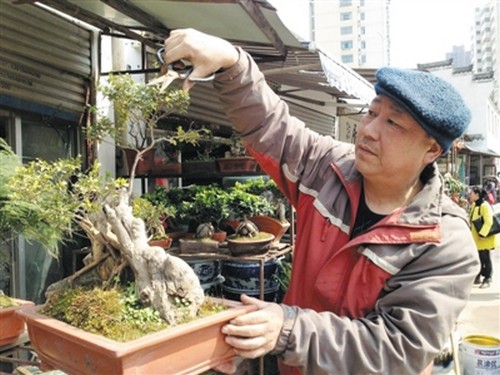
After azaleas sprout each spring, pruning and shaping should be done in conjunction with repotting. Cut off overly dense branches, leggy branches, and diseased or dead branches to make the main branches strong and encourage new shoots to sprout. In October, if the branches are still too dense, prune once more.
After azaleas bloom, the flowers do not fall off easily and should be picked off promptly to avoid consuming nutrients. Azaleas grow flower buds at the tips of branches. Each branch only needs to retain 1 larger flower bud, and the rest should all be picked off.
Each flower bud can produce 2-3 flowers. When the flower bud sheds its brown outer shell, only 1 flower needs to be retained, and the rest should also be picked off. Pruning in this way makes the flowers more beautiful and avoids excessive consumption of nutrients, which benefits the plant's future growth.
During the bud stage, buds should be thinned promptly to concentrate nutrient supply, promoting larger flowers with more vivid colors. Branch pruning is generally carried out in spring and autumn, cutting off crossing branches, overly dense branches, overlapping branches, and diseased or weak branches, and removing spent flowers promptly. Shaping generally follows the natural tree form with slight artificial modification, at will, shaping according to the tree.
If you want flowers during the Spring Festival, you can move the potted plant to a sunny spot in a greenhouse at 20°C in January or 20 days before the Spring Festival, with other management as normal, and you can enjoy the flowers during the Spring Festival. If you want flowers for "May Day," you can move the pot to an indoor cold storage below 5°C before early spring budding, move it to a sunny spot in a 20°C greenhouse on April 10, move it outdoors on April 20, and you can see flowers for "May Day."
Therefore, temperature can regulate the flowering period, allowing it to bloom at will in all four seasons. In addition, plants pruned immediately after flowering can bloom in late October; if pruned during the peak growing season, the flowering period can be delayed by about 40 days; if pruned in conjunction with cuttings, the flowering period can be delayed until February of the following year. Therefore, pruning at different times also affects how early or late the flowers bloom.