How to water a Japanese serissa bonsai? The correct method is right here
Japanese serissa (Serissa japonica) is an evergreen or semi-evergreen clumping small shrub. It may drop leaves in winter, but the degree of leaf drop varies depending on the environment and climate. Common cultivated varieties include 'Golden Edge' Japanese serissa with yellow-edged leaves, 'Variegata' Japanese serissa with white markings on the leaf surface, and double-flowered Japanese serissa with double white flowers.
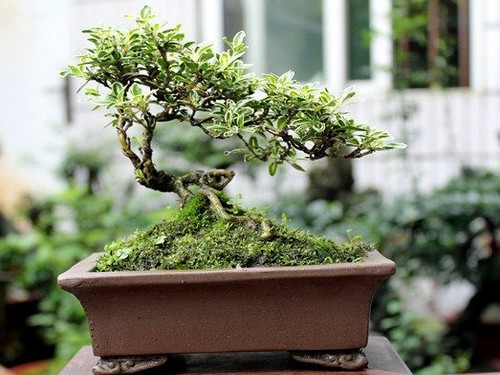
It blooms in early summer in June, covering the whole tree like snow, hence the name June Snow. The watering method for Japanese serissa described in this article is based on common problems encountered by other flower growers, as well as the matters needing attention during the watering process of Japanese serissa. We hope it can bring practical information to flower growers.
Japanese serissa has a certain drought tolerance and relatively likes water, but it is not tolerant of waterlogging. When watering, grasp the principle of checking whether the soil is dry or moist, and do not water when it is not dry. During the rainy season, prevent water accumulation in the pot. In rainy weather, the pot should be placed on its side. In hot and dry summer weather, spray water on the leaf surface in the morning and evening to lower the temperature and increase air humidity, so as to facilitate its growth and flowering.
Regarding watering, many flower growers really do not understand it. One moment it is said to be dry, another moment it is said to be wet. Flower growers should learn to understand that potted cultivation is different from ground cultivation. Potted cultivation is limited by many factors, such as the depth of the pot and the water permeability of the soil. Therefore, when watering, flower growers must not refer to time, but touch the soil. The best state should be moist but not wet, with occasional drying, which is more beneficial to plant growth.
The amount and frequency of watering Japanese serissa should be determined according to its growth condition and season. Generally, in spring and summer, when growth is vigorous, the pot soil should be kept moist, but be careful not to let water accumulate. In autumn and winter, watering should be controlled.
During the growth period, its water needs should be properly irrigated. Because it is relatively cold-tolerant, the main principle is to ensure watering when the soil is dry in summer. In winter, it is not suitable to water too much.
During the growing season, it should be watered frequently to keep the pot soil moist. It should not be too dry or too wet for a long time. Water accumulation in the pot or loss of water in the pot soil must be avoided. In summer, spray water on the leaf surface 1-2 times a day. In winter, the number of waterings should be appropriately reduced, and it is enough to keep the pot soil moist and slightly dry.