A Detailed Guide to Carnation Propagation Methods, Easy for Beginners to Learn
How do you propagate carnations? How to propagate carnations has always been a question of great concern to flower growers. Carnations are generally propagated by cuttings, carried out in early spring. As for the specifics of how to propagate carnations, Yunzhonglai Flowers provides a detailed introduction below, hoping to help you with carnation propagation!
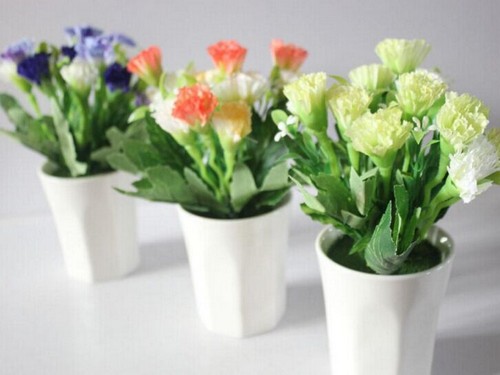
Carnations can be propagated by cuttings, sowing, tissue culture and other methods. In general, conventional propagation is mainly by cuttings.
The germination temperature is best at around 20°C. They should be sown indoors in early spring, or sown in the open field in September-October, and protected over winter, where the temperature must not be higher than 15°C, nor lower than 0°C. In spring, simply pot them up.
Apart from the hot summer, cuttings can be taken at any other time, and cuttings taken from late January to early February give the best results. For the cuttings, you can choose side shoots 7-10 cm long growing from the leaf axils in the middle of the stem. When taking cuttings, use the "bud-breaking method," that is, hold the side shoot and snap it downward along the main stem, so that the base of the cutting carries a node scar, which makes it easier to root. Take the cuttings and stick them immediately, or moisten the cuttings with water before sticking them. The cutting medium is ordinary garden soil mixed with 1/3 rice-hull ash, or sandy soil. After sticking, water frequently to maintain humidity and provide shade; at a room temperature of 10-15°C, roots form in about 20 days, and after one month they can be transplanted and planted out.
Layering is done in August-September. Select a long branch, cut open the bark on the part touching the ground with a knife, and cover it with soil. After 5 to 6 weeks, it will root and survive.
Cuttings are mostly taken in spring, and apart from the hot summer, they can also be taken at other times. The cutting bed medium can be perlite plus peat or charred rice husk. For the cuttings, it is best to choose strong side shoots from the middle of the plant with short internodes. When taking the cutting, hold the shoot with your hand and pull it downward, so that the base of the cutting carries a layer of the main stem's bark, which makes it easier to root. After taking the cutting, stick it immediately; do not let the leaves and stems wilt, otherwise the survival rate will be greatly reduced; or before sticking, soak the cutting in water so that the cutting absorbs enough water and the growing point hardens, then stick it. To increase the survival rate of cuttings, treat the cuttings with naphthaleneacetic acid or indolebutyric acid at a concentration of 10-100 mg/kg. After sticking, provide shade and spray water frequently. At 13-15°C, roots form in about 20 days.
Seed propagation is mainly used for cross-breeding, or for producing potted flowers from F1 hybrid seeds. The suitable temperature for sowing is 18-20°C; germination takes about 1 week, and seedlings form in 2-3 months.
Tissue culture propagation is an important means of producing virus-free plantlets and is widely used in cut-flower production. Generally, shoot tips are used for virus-elimination culture, and then mass-propagated.
Carnation cutting propagation method:
Choose the 3rd-4th side bud from the middle of the stem as the cutting; shoots growing from the root crown are best. Taking cuttings when the flower buds are forming is more suitable. After cutting the cuttings, stick them immediately. Do this on a cloudy day or in the morning.
After cutting, dip the cut surface at the base in charcoal powder to prevent water loss from the cutting, which would be unfavorable for survival.
River sand is suitable as the soil; insert to a depth of about 2 cm. After sticking, spray or sprinkle thoroughly with water at once, but do not use too much water, to avoid causing the cuttings to rot.
Avoid direct sunlight and keep the room temperature at 10-13°C; after about one month, they will root. After rooting, the light can be gradually increased.
About 50 days after sticking, transplant them separately. After the transplants have recovered from transplanting and the terminal buds resume growth, begin fertilizing. Generally, apply dilute manure water once every 10 days, but do not water too much. During the vigorous growth period, flowering period and hot summer period, watering should be increased.
Pinch out the growing tips when the seedlings have more than 5 pairs of leaves. When the side shoots have more than 3-4 pairs of leaves, pinch them a second time.
In the end, it is best for the whole plant to have 12-15 side shoots. You can also pinch again to encourage side shoots to develop and bloom. The last pinching should be no later than mid-August. Transplanting should be no later than early July, otherwise it will greatly affect the plant's growth and flowering.