How to plant geranium seeds? Detailed sowing method and steps
Geranium, also known as zonal geranium and fish geranium, originated in southern Africa and is now widely cultivated around the world. A pot of geranium is not cheap on the market, and seedlings are also very expensive. If you don't have gold, then trade labor for it! Buy seeds yourself, plant a few pots with your own hands, and enjoy the joy the planting process brings you! Next, let us learn about growing geranium from seeds.
Conditions for growing geranium seeds:
Soil choice: Geranium is suited to growing in sandy soil. Mixing some sandy soil into the soil bought at the flower market is more conducive to the growth of geranium.
Weather effects: Strong winds will snap geraniums, while heavy rain will cause the roots of geranium to be soaked in rainwater, resulting in a lack of oxygen for root respiration and thus rot.
How to plant geranium seeds?
It can be done in both spring and autumn, with indoor pot sowing in spring being preferable. The suitable germination temperature is 20-25°C. Geranium seeds are not large, so the soil covering after sowing should not be deep, and they germinate in about 2-5 days. Sown in autumn, they can bloom in the summer of the following year. Seedlings propagated by sowing can be selected to produce excellent intermediate-type varieties.
Geranium likes warm winters and cool summers and sunlight, so geranium seeds can be planted in both spring and autumn, with indoor pot sowing in spring being preferable. The suitable germination temperature is 20-25°C. Geranium seeds are not large, so the soil covering after sowing should not be deep, and they germinate in about 2-5 days. Sown in autumn, they can bloom in the summer of the following year. Seedlings propagated by sowing can be selected to produce excellent intermediate-type varieties.
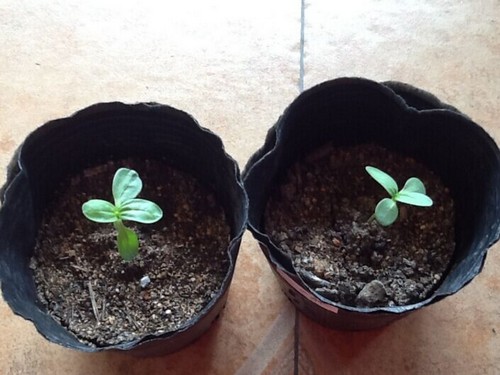
Under suitable conditions, geranium seeds begin to germinate on the day of sowing, and the radicle emerges in about 1-3 days, until the cotyledons unfold. Cover with coarse vermiculite to maintain moisture. Light is not required for germination; providing 100-1000 lux of light will increase the germination rate and reduce the chance of leggy growth. For 1-3 days after sowing, until the young roots appear, keep the medium saturated; from day 4-8, reduce to moist; after day 9, keep the medium alternating between dry and wet. Air humidity should be kept at 100% until the young roots appear, then reduced to 40%.
After the cotyledons unfold, to ensure that the environmental conditions are suitable during the vegetative growth period and that nutrient supply is sufficient, so as to ensure the plant can smoothly enter the flowering induction stage, generally it is planted in the ground in the south, while in the north it is better to grow it in pots and overwinter indoors.
When planting in the ground, choose a spot that does not easily accumulate water; the soil should be loose, fertile, well-drained sandy loam. For pot cultivation, use a growing mix of leaf mold, garden soil and sand. Before planting, first place tiles at the bottom of the pot to facilitate drainage. After caring for it for a period, move it into a larger pot; at this time, apply an appropriate amount of decomposed farmyard manure in the pot as a base fertilizer, fill the growing mix on top, and the roots should not come into direct contact with the base fertilizer.