A detailed guide to geranium propagation methods that even beginners can easily master
Geranium flowers cluster densely into balls, with colors ranging from red, white, pink, and purple, offering many variations. There are single-petaled and double-petaled types, as well as variegated-leaf varieties with white, yellow, and purple markings on the leaves. Potted plants are suitable for indoor and outdoor decoration, and can also be used as spring flowerbed flowers. Geraniums are excellent potted plant material. Planting colorful geraniums in containers of various styles, combined with variations in planting methods, can create potted plants of different styles that are delightful to the eye.
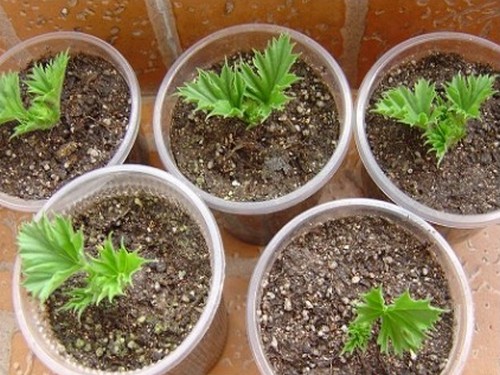
Geranium is a perennial herb, 30—60 cm tall. The stem is upright, woody at the base, fleshy in the upper part, much branched or unbranched, with distinct nodes, densely covered with short soft hairs, and with a strong fishy odor. The leaves are alternate. Today I will introduce the propagation methods of geraniums.
1. Seed propagation:
It can be done in both spring and autumn, with indoor pot sowing in spring being preferable. The suitable temperature for germination is 20-25°C. Geranium seeds are not large, so after sowing, the soil covering should not be too deep; they germinate in about 2-5 days. If sown in autumn, they can bloom in the summer of the following year. Seedlings grown from seed propagation can be selected to breed excellent intermediate-type varieties.
2. Cutting propagation:
Apart from June to July when the plants are in a semi-dormant state, cuttings can be taken at any time. Spring and autumn are preferable. In high summer temperatures, cuttings tend to blacken and rot. Select cuttings 10 cm long, with the top portion being best, as it has vigorous growth and roots quickly. After cutting, let the cut end dry for several days to form a thin film, then insert into a sand bed or a mixed substrate of expanded perlite and peat, being careful not to damage the stem bark of the cutting, otherwise the wound is prone to rot.
After insertion, place in a semi-shaded area, maintain a room temperature of 13-18°C, roots will form 14-21 days after insertion, and they can be potted when roots are 3-4 cm long. During the cutting process, soaking the base of the cuttings in 0.01% indolebutyric acid solution for 2 seconds can improve the survival rate and rooting rate of cuttings. Generally, cutting-propagated seedlings bloom after 6 months of cultivation, that is, cuttings taken in January bloom in June; cuttings taken in October bloom in February to March of the following year.
3. Greenhouse propagation:
Geraniums have strong adaptability, bright flower colors, and a long flowering period, and are suitable for indoor placement, flowerbed arrangement, and so on.
4. Tissue culture:
Geraniums can also be propagated by tissue culture. Using MS medium as the basic medium, adding 0.001% indoleacetic acid and kinetin to promote the explant to produce callus tissue and adventitious buds, and using 0.01% indoleacetic acid to promote rooting. The tissue culture method provides a new approach for the good-seed breeding and selective breeding of new varieties of geraniums.