Detailed Guide to Pruning Methods for Banana Shrub (Michelia figo) Bonsai
Banana shrub (Michelia figo) prefers light shade, is not tolerant of drought or exposure to the sun, favors deep, fertile, acidic soil, can withstand cold, and is best planted in a slightly sheltered spot. The fertilizer and water management for potted banana shrub is similar to that of wintersweet (Chimonanthus praecox), except that it is more shade-tolerant than wintersweet and requires higher air humidity and soil moisture. When the temperature is high, its flowers give off a strong banana scent, so some people call it the “banana flower”; they also carry a sweet wine fragrance, hence it is also named the “drunken flower”.
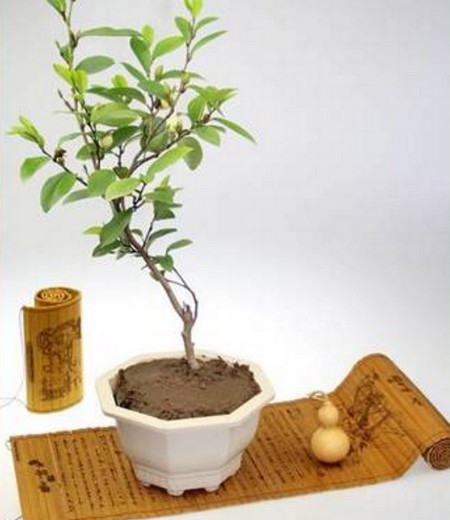
Banana shrub naturally grows into a round-headed canopy, so it is generally not pruned. However, to make it bloom more profusely and grow vigorously, appropriate pruning can be done each year when repotting and changing the soil, and after the flowering period ends. Mainly remove leggy branches, overly dense branches, weak slender branches and dead branches, so that the tree body has good ventilation and light penetration. After the flowers fade, if no seeds are to be kept, cut them off promptly to reduce nutrient consumption.
To make banana shrub grow luxuriantly and bloom more, pruning should be carried out every year in both spring and autumn. Banana shrub has strong sprouting ability and grows quickly; it can also sprout after the trunk is cut back. Generally, appropriate pruning is done when potting or repotting (in autumn from late September to late October, in spring from March to mid-April), and after flowering, tidying up is done -- cutting off leggy branches, diseased and weak branches and deformed branches. In addition, it can also be pruned into various different shapes according to bonsai requirements.
Pruning essentials:
Banana shrub should not be pruned excessively. Ordinarily, after flowering, prune the leggy branches, diseased and weak branches and overly dense overlapping branches that affect the tree shape, and remove the fruit after flowering to reduce nutrient consumption. Before spring budding, appropriately thin out some old leaves to stimulate new branches and foliage.
Banana shrub should not be pruned excessively. Ordinarily, after flowering, prune the leggy branches, diseased and weak branches and overly dense overlapping branches that affect the tree shape, and remove the fruit after flowering to reduce nutrient consumption. Before spring budding, appropriately thin out some old leaves to stimulate new branches and foliage. The banana shrub has elegant branch tips and is captivating when in bloom; it is a well-known variety for both foliage and flowers, very suitable for beautifying the home. Judging from its cultivation methods, it is also relatively simple to care for, so if you like banana shrub, you may wish to place it in the living room or other spots at home.