How to water Yunnan camellia bonsai correctly
Dali, renowned worldwide for its four great sights of “wind, flowers, snow and moon,” is especially notable for its flowers, which surpass the elusive and ethereal wind, snow and moon in both form and spirit. And among the myriad colorful flowers between the Cangshan Mountains and Erhai Lake in Dali, the camellia, acclaimed as the finest under heaven, is the most celebrated.
Ranking first among Yunnan's eight famous flowers, the Yunnan camellia belongs to the Theaceae family, Camellia genus, also known as Dian camellia or camellia, Nanshan camellia, and large camellia. It is an ancient plant and a Yunnan specialty, with more than 150 varieties. It is characterized as an evergreen, large-flowered, brightly colored tree form that blooms in winter and spring with a long flowering period, forming a unique highlight of the Yunnan plateau landscape. Cultivation in Yunnan has a long history of 1500 years, and as early as the Ming Dynasty of our country there was the praise that “Yunnan camellias are the finest under heaven.”
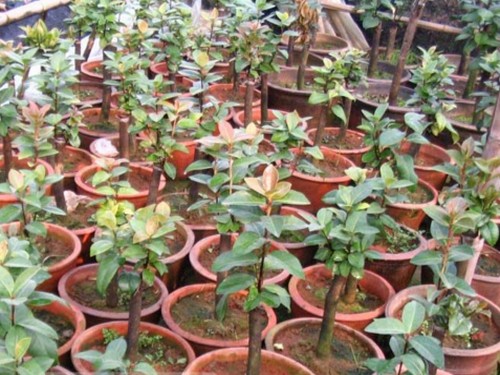
How to water Yunnan camellia:
1. Water quality requirements
For watering Yunnan camellia, soft water is best; hard water, water that is somewhat alkaline, and water containing salt are all unsuitable. Generally, river water, pond water, spring water, well water and tap water can be used.
2. Watering principles
Yunnan camellia is an evergreen woody plant. To ensure normal growth of the plant, watering must be correct and reasonable. Whether potted or planted in the ground, its soil must be kept consistently moist; both excessive dryness and excessive wetness are harmful to plant growth. Yunnan camellia has somewhat different water needs at different growth stages. From spring to early summer, camellia vegetative growth and reproductive growth are vigorous; during this period new shoots grow and flower buds differentiate, so it should be watered frequently and abundantly. In autumn and winter, as temperatures gradually drop, the physiological activity of the camellia relatively weakens; at this stage the flower buds develop and swell, so watering should be appropriately controlled and the frequency of watering reduced. During the flowering period of Yunnan camellia, the plant needs a sufficient water supply and should be watered more promptly.
3. Watering time
The watering time for potted Yunnan camellia differs according to the season. In spring and autumn, watering in the morning or early afternoon is best. In summer, when the climate is hot, watering is best done before 10 a.m. and in the evening. In winter, when temperatures are relatively low, watering in the afternoon is best. Never water at noon on clear days, especially in summer, because the midday temperature is relatively high, and after watering the soil temperature suddenly drops, which is harmful to root growth and thus affects the normal growth of the plant. The degree of dryness or wetness of the camellia pot soil is related not only to the season and to sunny or rainy weather, but also to temperature, air humidity, length of sunshine, degree of shading, and the soil's water-holding capacity.
In the same season and the same weather, the degree of dryness or wetness of camellia pot soil is not necessarily the same. Specifically, whether to water can be determined by actually observing the dryness or wetness of the pot soil. There are three methods: first, observe the soil and look at its color; white soil is dry, black soil is wet. Second, tap the pot and listen to the sound; a clear sound means dry, a dull muffled sound means wet. Third, feel and rub the soil; hard mud means dry, soft mud means wet. Determining whether potted camellia needs watering through the above methods of looking, listening and rubbing is relatively scientific and reasonable.
4. Watering methods
For watering potted Yunnan camellia, the method of direct watering combined with spraying water on the leaves is generally used. A water ladle or a long-necked watering can may be used, and a plastic hose may also be used for watering. When watering, pay attention to the speed of the water flow, and make the water moisten the pot soil as evenly and slowly as possible. Especially when using a plastic hose, because water pressure makes it difficult to control, it is best to spread a layer of pine needles or a piece of tile on the surface of the pot soil to protect the soil surface from being washed away. Each watering must soak through, until water flows from the drainage hole at the bottom of the pot. Never give half-hearted watering that leaves the pot soil wet on top and dry below.
For potted flowers whose soil has become excessively dry due to poor management, causing the camellia plant's leaves to slope downward or the green color of the leaf surface to become slightly pale, do not immediately water thoroughly. First move the plant to a shaded place, water a little to make the pot soil slightly moist, then water thoroughly in 2-3 rounds, letting the plant gradually adapt so as to restore normal growth. In dry or high-temperature periods, leaf spraying can be increased, once a day, in either the morning or evening. Spraying water on the leaves can increase the air humidity of the micro-environment and also wash dust off the leaf surface, making the leaves clean and attractive, which is beneficial to photosynthesis and respiration and reduces the occurrence of pests and diseases.