How to grow pennywort (Hydrocotyle) from seed? Detailed sowing method
As a common potted ornamental flowering plant, pennywort (Hydrocotyle) is affectionately nicknamed "Qianqian" by gardening enthusiasts, and its propagation methods attract much attention, especially how to propagate pennywort from seed, which people are eager to learn about. However, seed propagation is generally not recommended, because seeds are difficult to keep alive, and when buying from online stores, the shipping cost is higher than the cost of the seeds, and you can easily be cheated; moreover, grass grown from seed does not easily grow again, so it is better to use stem-node propagation, which is more convenient. But we will still give a brief explanation below on how Qianqian can be propagated from seed.
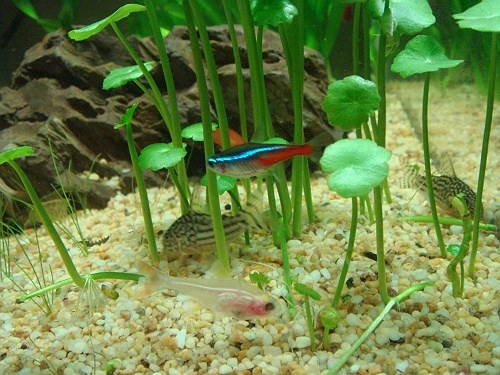
Pennywort prefers warm and humid conditions. A location with partial sun or shade is best, and direct sunlight should be avoided. It is not fussy about potting soil, but loose, well-draining potting soil is best, or it can be grown directly in water, with an optimum water temperature of 22-28°C. It is shade-tolerant, moisture-tolerant, slightly drought-tolerant, and highly adaptable. Pennywort is robust by nature, easy to plant, and fast to propagate, and it can grow both in water and on land.
1. Obtain seeds. You can buy them from a fairly reputable online store or flower market, or receive them as a share from fellow gardeners. In short, how you obtain the seeds is not the main point.
2. Choose a container. Anything will do. The seeds need to be exposed to air. If clay pellets and stones are added too early during water culture, the seeds will more or less fall under the stones, making it very difficult for them to sprout. Therefore, it is generally recommended to first find a bottle cap (a beverage bottle cap will do), then prepare some sun-exposed tap water, plastic wrap, and a small rubber band, and everything is OK. If you want to grow it in water, it is best not to use a flowerpot, but a closed container.
3. If purchased from an online store or flower market, when you unwrap the seed package, you will find that the seeds are wrapped in a green powder coating. Do not blindly crush it; it really is not the seed's shell. Pour the seeds into the bottle cap, but do not pour them all out at once, to prevent failure and keep a backup for next time. Pour in a small amount of water, just enough to dissolve the green coating, then cover with plastic wrap.
4. Put the prepared bottle cap in a dark place and just wait 2-4 days, and you can see that some seeds have already broken through their shells, and some even show white roots. Every evening, remove the plastic wrap to let the seeds breathe, which prevents root rot.
5. When the white roots are 4-6 mm long, they can be exposed to sunlight, but it is best to do so at 8-9 o'clock to avoid sunburn. If they are not exposed to sunlight, the leaves will not easily grow out.
6. When the seeds have sprouted to the point of being about to shed their shells, they can be potted up. Put clay pellets or stones into a cup, place the small sprouts in, gently secure the roots with the clay pellets or stones, and add water, preferably pouring the water along the edge of the cup, otherwise the secured seedlings will be washed loose. Pour water until it just touches the roots.
7. Expose them to sunlight every day, do not let them be exposed to strong wind, add water in a timely manner, and if necessary add a little nutrient solution for water culture, and the seedlings will grow vigorously.
Pennywort does not need a very large pot; it can also be planted in a larger bowl, and a narcissus pot for growing narcissus also works. Use ordinary garden soil, mix in an appropriate amount of river sand, and add a small amount of organic fertilizer as base fertilizer. When planting Qianqian, it can be planted flat, with the rhizome just slightly covered so it is not visible; be sure not to plant it too deep. Then place it in a semi-shaded place for a week and wait for new leaves to grow before exposing it to sunlight.