A Complete Guide to Planting Sunflower Seeds
How do you grow sunflowers? Growing sunflowers well is actually very simple - you don't need a very large pot, you don't need much soil, and you don't even need much care. Give it a try too!
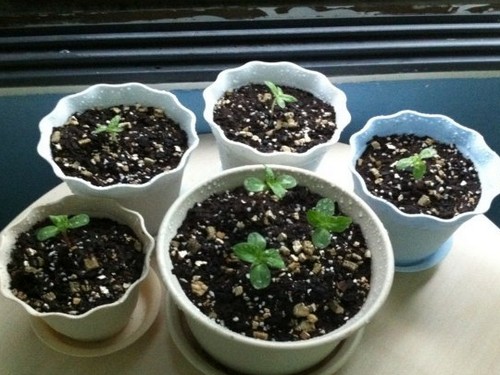
Step one: choosing seeds
Choosing seeds is very important. Sunflowers come in different varieties, including edible types, the kind that produce sunflower seeds, which are said to be able to grow up to 3 m tall, and of course those need very large pots too, and the flowers are also enormous. At home, sunflowers are usually grown on balconies, so it is better to use small pots, which means you should choose seeds of dwarfed ornamental sunflowers.
Step two: sowing
(1) Timing — it is recommended to sow after the beginning of April, once the temperature can stay stable at around 20 degrees. When sowing at this time, you do not need to soak the seeds in advance; just throw them into the soil, and they will sprout in 3 days and be ready to transplant in 5 days, growing especially fast.
(2) Seedling soil — when the temperature is low, seeds may not sprout for a long time. At this point, if the soil used for raising seedlings is old soil in which other plants were grown last year, there may well be small insect eggs in the soil layer. Then, before the seeds even sprout, the insect eggs hatch first, and at this time the sunflower's seed kernel becomes the best food for the insect larvae!
(3) Seedling pots — you can buy special seedling pots, the kind with a transparent lid on top. This first stops moisture from evaporating, and second lets you clearly see how the seeds are sprouting. Of course, you can also sow directly in a large pot, but remember that after watering thoroughly, you should finally lay a layer of plastic wrap on the surface. This keeps in warmth while preventing moisture from evaporating too quickly, and during the seedling emergence period there is no need to add more water.
In summary: if you use ordinary soil, then sow when the weather is a bit warmer, so the seeds are not eaten by small insects; if you use high-grade seedling soil, it is fine to sow earlier, but even then you still have to wait a long time for sprouting. So do not be impatient - it is still better to sow a bit later!
1. Sowing time
The determination of sowing time mainly depends on the local temperature. When the temperature in the 5em soil tillage layer stays stable at 8-10 degrees C for 3-4 consecutive days, sowing can begin. Spring sowing should be early. Early sowing can make full use of light, heat and water resources, let the full-bloom period avoid the rainy season, and reduce the harm of sunflower sclerotinia rot. At the same time, early sowing can bring earlier maturity and avoid damage from early frost.
2. Sowing method
There are mainly two sunflower sowing methods, namely mechanical precision hill dropping and manual hole sowing. Mechanical precision hill dropping can place seeds directly into moist soil, disturbs only a small area of the upper layer, reduces evaporation, has a relatively good soil-moisture-preserving effect, can reduce labor intensity, improve work efficiency, and at the same time save seeds. Manual hole sowing is a commonly used sowing method suitable when the underlying soil moisture is insufficient and supplemental water measures are needed.
3. Sowing rate
The sowing rate should be determined according to planting density, thousand-grain weight of the seeds, seed germination rate, and also factors such as field loss rate. Generally, the sowing rate is 12.5-15 kg per hectare.
4. Sowing depth
Sowing depth should be determined according to soil type and soil moisture. In moist soil, saline-alkali land and heavy-textured soil, the sowing depth should be shallow, generally around 3 cm; in arid areas and on windblown sandy soil, the sowing depth should be 5-7 cm. After sowing, press the soil down promptly to prevent moisture loss, so that the seeds make close contact with the soil, absorb water quickly and emerge early. A suitable sowing depth can both ensure the emergence rate and avoid harm from soil-borne pathogens, achieving uniform and strong seedlings.