How to prune a Chinese sweet plum bonsai? Detailed pruning methods and techniques
In gardens, the Chinese sweet plum can be used as a hedge or vertical greening material, and it is also suitable for planting among rocks. This plant is extremely adaptable and not demanding about soil; it can adapt to acidic, neutral and calcareous soils, and it is drought-tolerant, tolerant of waterlogging and tolerant of poor soil. A carefully pruned and tended Chinese sweet plum bonsai will become one of the most popular bonsai plants. Now let's take a look at the pruning methods for Chinese sweet plum bonsai!
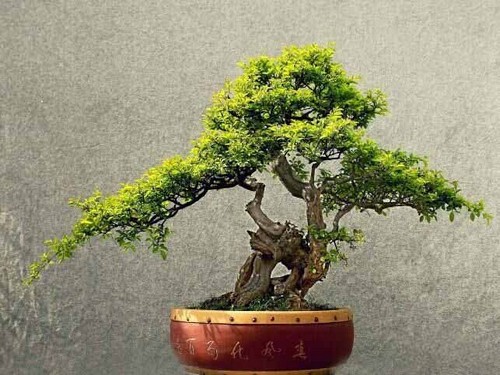
For a Chinese sweet plum bonsai that has been grown and established for many years, especially an older stump, to prevent partial dieback and branch ageing, the pot should be changed and the soil replaced every 2-3 years between February and March, cutting off some of the old roots and branches. The Chinese sweet plum has very strong sprouting ability in its branches, buds and roots; the more the branches are pruned, the more vigorously they grow, and wherever the roots are covered by soil, shoots will sprout from that spot.
The best planting season for a newly dug stump is from December each year to March of the following year. Once the bud shoots are 10-20 cm long, the unwanted bud shoots can be removed, and the retained branches that grow too long should also be appropriately shortened to reduce water consumption, so that the tree's nutrients are concentrated in the stump and at the branch wounds.
Branches at the wound should not be blindly disbudded or pruned too early; let them grow freely, so that the spread of dieback at the wound can be controlled. The branch wound can slowly heal over on its own; only then can the regrown branches be cut off.
Pruning should be done at the right time. Generally, the suitable pruning times are late spring and early autumn, as in these two seasons the Chinese sweet plum stump has the strongest sprouting ability and the most vigorous growth. Water shoots, overlapping branches, crossing branches, radiating branches, dead branches and pest- or disease-damaged branches should be cut off at any time. But note that in hot weather, new buds are easily scorched, causing leaves to curl, so after pruning it is best to place the plant in a shaded spot until growth resumes normally before exposing it to strong light.
The Chinese sweet plum is very tolerant of pruning. After autumn each year, a shaping prune can be carried out, removing some overly dense branches and leaves, and cutting off various messy branches or water shoots, to maintain a certain shape and posture and promote lush branches and leaves. The Chinese sweet plum has extremely strong sprouting ability, so pinching should be done in good time to make the axillary buds sprout side branches; the more times you pinch, the denser the branches and leaves become.