How to Water a Pine Bonsai? Master These Techniques for Easier Care
Water is an essential element for plant growth, accounting for about 70% of a plant's total composition, and it is one of the most important conditions for plant growth. Therefore, watering is also a rather important body of knowledge. Watering may seem simple, but doing it well is not easy. A good bonsai technician needs three years of careful study, exploration, and summarization to water bonsai properly. Throughout the year, the weather changes unpredictably, sometimes cold and sometimes hot, sometimes cloudy and sometimes clear. For various weather conditions and each season, watering involves knowledge. Watering a pine bonsai must follow these principles:
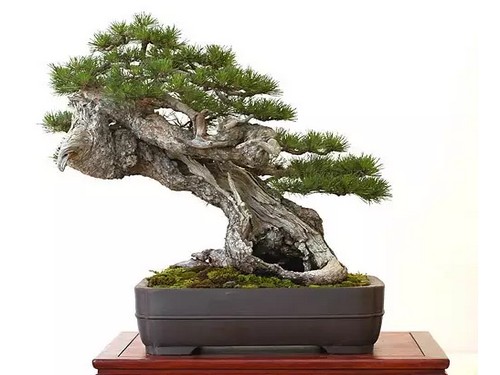
1. The water used for watering should be stored in a container in advance and left to stand for 24 hours to raise the water temperature. Make the difference between water temperature and air temperature less than 10°C, that is, the difference between the watering temperature and the temperature around the tree pot being watered should be less than 10°C. Do not pump water directly from an underground well to water bonsai; the temperature difference is too great, and the bonsai is likely to die.
2. Watering must be based on weather changes. In general, when the temperature is high, sunlight is strong, the air is dry, and it is windy, the pot soil evaporates quickly, so water should be increased appropriately; when the temperature is low, it is cloudy, and there is no wind, the pot soil evaporates slowly, so water should be reduced appropriately; when growth is fast, water more, and when growth is slow, water appropriately less.
3. Regardless of the season, watering must follow the principle of watering thoroughly only after the soil has dried thoroughly. Do not give half-hearted watering, because most of a pine tree's roots are at the bottom of the pot. If the water does not penetrate thoroughly, it is not good for the pine tree's growth. Solution: water twice in succession. Water a little the first time, wait 3-5 minutes, then water a second time, and this time water until it is sufficient.
4. Cooling in summer: when the temperature exceeds 30°C, sprinkle water around the pot to lower the temperature.
5. Preventing waterlogging in the rainy season: during continuous rain, if water accumulates on the pot surface, check frequently and pour off the accumulated water to prevent the tree from dying from waterlogging.
6. Watering in winter should be reduced. Indoors, depending on how dry the pot surface is, water once every 10 to 15 days.
Watering a pine tree depends on the condition of the pot surface. Generally, too much watering makes the pine needles overly vigorous and growth too fast, which is not good for appearance; too little watering causes the pine needles to turn yellow from lack of water, or even die. Watering is especially important in the hot summer and requires even more care. Over the years, the author's watering mantra has been: water when dry, do not water when not dry, water thoroughly when watering, and do not let fertilizer water run off.
Watering should be moderate. The first and second waterings should penetrate thoroughly; afterward, it should be controlled, and if it is not especially dry, do not water. Deaths of pine trees caused by watering often occur, especially for pines planted on lawns. To avoid excess water, plant shallowly at planting time, bury one third of the root ball, then mound soil around it, so that when there is a lot of sprayed water it can drain outward toward lower ground. Keeping soil moisture content between 7% and 14% is most favorable for pine tree growth. Exceeding this limit, reaching a soil moisture content of 16%, will cause pine trees to die after a slightly longer time (more than 10 days). The reason is that root respiration is blocked and the tree dies from oxygen deprivation.