A Detailed Guide to Propagating Calceolaria by Seed, Beginners Can Learn It Too
Calceolaria is generally propagated by sowing, carried out in cool weather at the end of August and early September. Sowing too early when the weather is hot makes the plants prone to damping-off, while sowing too late results in small plants that affect flowering the following spring. Calceolaria (Calceolaria) seeds are tiny, with about 25,000 seeds per gram, and the optimum germination temperature is 18-21°C. Sow indoors in pots from August to September; sowing too early causes seedling collapse due to high temperatures, while sowing too late affects flowering.
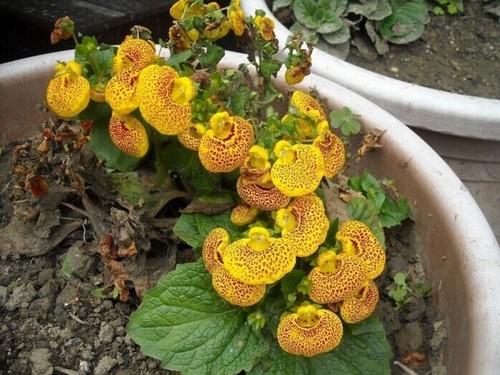
The soil used for pot sowing must be sterilized at high temperature. When sowing in pots, the potting soil should be pressed firm, the seeds gently scattered in and pressed flat, without covering with soil. After the bottom of the pot is soaked in water, cover with glass or plastic film and place in a semi-shaded spot. Germination occurs 7-10 days after sowing. After the cotyledons appear, thin or transplant the seedlings in time, and pay attention to ventilation and maintaining humidity. Keep the room temperature at 16-18°C.
For sowing, it is best to use a sterilized, well-rotted leaf mold mixed evenly with fine sand as the growing medium. After sowing, cover with a layer of sieved fine sand just enough to cover the seeds. After sowing, water by the soak method, cover the pot surface with glass, place in a shaded spot, and maintain around 20°C. Seedlings emerge in about half a month. 3 days to 5 days after emergence, remove the glass, place in a ventilated and lit spot, and thin the seedlings in time. Lower the temperature to 15°C, and never let the potting soil become too dry or too wet. Be careful to increase air humidity. When 2 to 3 true leaves have grown, plant into small pots. In November to December, when there are 8 leaves, they can be planted individually into large pots for final planting, requiring a room temperature of 8°C to 12°C, and they can bloom from February to April the following year.
20 days after sowing and emergence, when the seedlings are 2.5 cm tall, transplant once with soil attached. 30 days after transplanting, when the seedlings are 5 cm tall, plant them out into 10-15 cm pots. A room temperature of 10-12°C is preferable. For forcing cultivation, supplement 6-8 hours of light per day to advance flowering. During the growing period, pay attention to ventilation and shading to prevent pest problems and scorching of the leaves. Fertilize once every half month.
Nitrogen fertilizer must not be applied in excess, otherwise it easily causes spindly growth of stems and leaves and severe crinkling. When the flower spikes emerge, apply 1-2 additional applications of phosphorus and potassium fertilizer. At the same time, the lateral buds in the leaf axils should be removed in time, otherwise too many lateral flower branches will not only affect the development of the main flower branch, but also cause an irregular plant shape, lacking commercial value. In large-scale production, when the main bud begins to shift from basal leaves to upward growth, 0.2%-0.3% CCC can be sprayed on the leaf surface 1-2 times to control spindly growth and keep the plant compact.