How to water a narcissus bonsai? Master the correct method
There are many varieties of narcissus, mainly distributed in the southeastern coastal areas of China, where winters are mild and rainy and summers are hot and dry, making these areas very suitable for narcissus propagation and production. Narcissus cultivation is very simple; the common methods are soil culture, sand culture and water culture, keeping the growing temperature at around 15 degrees, with plenty of sunlight and frequent water changes and watering, and it will bloom in less than a month. Narcissus is one of the varieties of polyanthus narcissus, preferring warmth and moisture, and ranks tenth among China's top ten famous flowers. So how exactly should narcissus be watered?
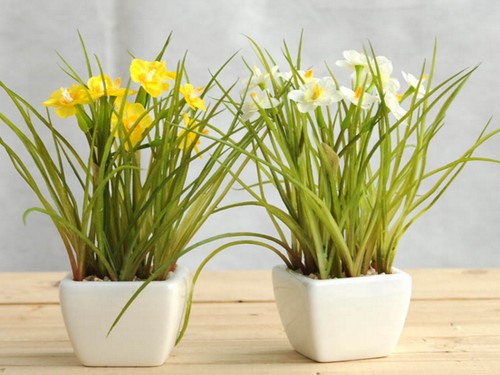
Narcissus has higher water requirements than ordinary plants. In the early stage after the bulb is planted, it does not need much water; keeping the soil moist is enough. During the peak period of growth and development, when all organs develop and fill out rapidly, the demand for water and fertilizer is high and must be replenished in time. In the maturity stage, metabolic activity weakens, and the need for water decreases accordingly, until it stops completely.
Narcissus belongs to the hygrophyte type, and its water requirements differ at different developmental stages. In the early stage of bulb planting, the water requirement is relatively small; keeping the soil moist is enough. During the vigorous growth and development stage, the water requirement is high and must be replenished in time, with frequent irrigation. By the maturity stage, metabolic activity weakens again, and the water requirement decreases accordingly.
1. Control the water amount
During the day, place the narcissus together with its pot in an environment with plenty of sunlight, and at night put it indoors. Remember not to leave any water; be sure to pour all the water out, as only this can control excessive leaf growth. In the early morning of the next day, add clean water to the pot again (special note: do not move the narcissus bulb).
2. Change the water
It needs to be given a water change every day, after which once every three days or so is enough; once it has formed flower buds, the water-changing interval can be adjusted to once a week. The temperature for narcissus is best kept at around 15 degrees, and the water temperature should be suitable, neither too high nor too low, so that its flowering period can last for several months. If full flower buds have not appeared before the Spring Festival, forcing is needed, and the water temperature for forcing should be close to human body temperature.
After this explanation, you should already have a deeper understanding of narcissus, so get started and cultivate it right away