Chinese Trumpet Creeper Propagation Methods and Key Points of Seedling Management Techniques
Chinese trumpet creeper (Campsis grandiflora) originated in central China and has a cultivation history of more than 2000 years. A complete flower of Chinese trumpet creeper is about 4-5cm, and the color is extremely vivid, mostly yellow-brown to brown. The propagation of Chinese trumpet creeper is mainly by layering and cuttings. Because Chinese trumpet creeper grows fast and blooms many times, attention should be paid to pruning and fertilizing, and attention should be paid to ventilation whether in winter or summer.
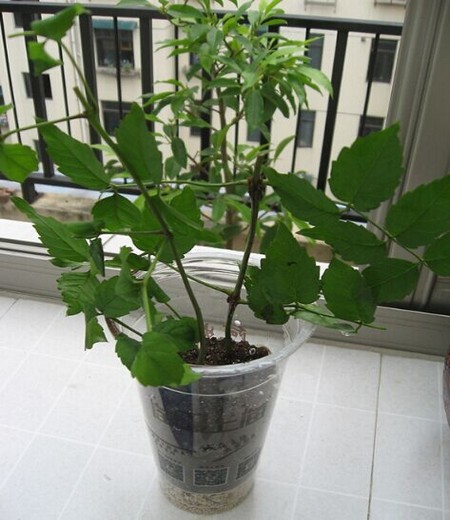
Chinese trumpet creeper is a small deciduous climbing woody plant, and it is also loved by most Chinese people. Next, let us take a look at the propagation methods of Chinese trumpet creeper.
Chinese trumpet creeper can be propagated by cuttings, layering and division. Choose sunny, well-drained, deep, fertile loam for planting. Cuttings can be done in spring and summer. Select thicker 1-year-old branches, cut them into cuttings 10-15 cm long, remove the leaves, then on the cutting bed with row spacing of 15-20 cm and plant spacing of 5 cm, insert 2/3 of the cuttings into the soil, press firmly and water.
In spring, cover with plastic film to maintain a relatively high temperature and a certain humidity. Generally, at a temperature of 23-25°C, roots will form about 20 days after cutting. If cuttings are taken from branches with aerial roots, they are even easier to survive.
Chinese trumpet creeper does not easily bear fruit, and it is very difficult to obtain seeds, so propagation mainly uses cutting and layering methods:
1. Cutting propagation method
In the south, it is mostly done in spring, and in the north, it is mostly done in autumn. In the middle and lower reaches of the Yangtze River, it is suitable to do it in April-May, and the survival rate is very high. The method is to select healthy branches free of pests and diseases, cut them into small sections of 10~15cm and insert them into the soil. Roots will form in about 20 days. It can be done in spring or the rainy season. In the Beijing area, July-August is suitable. Cut relatively firm and thick branches, each section 10-16cm long, and insert them into a sand bed, covering the top with glass to maintain sufficient temperature and humidity. Generally, at a temperature of 23-28°C, roots will form 20 days after cutting, and by the next spring they can be moved into the field, with row spacing of 60cm and plant spacing of 30-40cm. In warm southern regions, the new shoots of the previous year can be cut in spring and directly inserted at the edge of the field, where they can take root and survive.
2. Layering propagation method
Aerial roots grow on the stems of Chinese trumpet creeper. The layering propagation method is relatively simple and can be done in spring, summer and autumn. After rooting and surviving in about 50 days, they can be cut off and transplanted. In July, pull thick vines to the ground surface, cover them in sections with soil mounds, expose the buds, keep the soil moist, and roots will form in about 50 days. After rooting, cut them off and transplant. In the south, layering can also be done in spring.
3. Root division propagation method
Root division propagation: It is suitable to do in early spring, that is, dig out the small seedlings growing from root buds near the mother plant and plant them. Chinese trumpet creeper does not easily bear fruit, and it is very difficult to obtain seeds, so propagation mainly uses cutting and layering methods.
Seedling stage management:
Early management should pay attention to watering, and later management can be more extensive. When the plant grows to a certain size, support stakes should be set up. Before sprouting each year, appropriate thinning can be carried out to remove dead branches and overly dense branches, so that the tree shape is reasonable and conducive to growth. Before flowering, apply some compound fertilizer and compost, and carry out appropriate irrigation, so that the plant grows vigorously and blooms densely. For pot cultivation, it is advisable to choose plants more than 5 years old, keep the main trunk and cut it short at 30-40cm, and at the same time trim the roots, retaining the main root system, and after potting, make it regrow new branches.
Of the sprouted new branches, only keep the upper 3-5 and cut off all the lower ones, making it umbrella-shaped, control water and fertilizer, and it can take shape after one year. Set up a support frame and let it climb. After buds appear in the following summer, thin the flowers in time and apply a liquid fertilizer once, then the flowers will be large and brightly colored. In winter, place it indoors without freezing to overwinter, strictly control watering, and prune before sprouting in early spring.
In early spring, it is advisable to cut off branches that are not sufficiently developed, dried out over winter, and crowded, so as to keep it neat. If growing it in a pot for ornamental purposes, you can choose plants more than five years old, keep the main trunk at a height of about 30 cm, cut it off and dig it up, properly prune the roots, keeping only the main root system, and pot it well; taking advantage of its strong sprouting ability, let it regrow new branches, still cut off the lower part, and keep only the upper 3-5 branches, forming an umbrella shape. Also control water and fertilizer so that it does not grow too vigorously. After one year of cultivation it can be formed. In the following summer when flower buds form, appropriately thin some buds, and the flowers will be large and beautiful. It is even better to pot small seedlings, but it takes longer, generally 4-5 years to grow.