Seed Propagation Methods and Technical Key Points for Black Locust
Black locust is a tree species with relatively strong vitality and reproductive capacity. It can not only be used for landscaping and ornamental purposes and for purifying urban air, but can also be used for afforestation to protect the ecological environment. It is a tree species with relatively high cultivation value. Although black locust has a certain drought resistance, is not tolerant of waterlogging, has no strict requirements for soil, and has very strong adaptability, we still need to master some basic knowledge of black locust planting in order to better care for it.
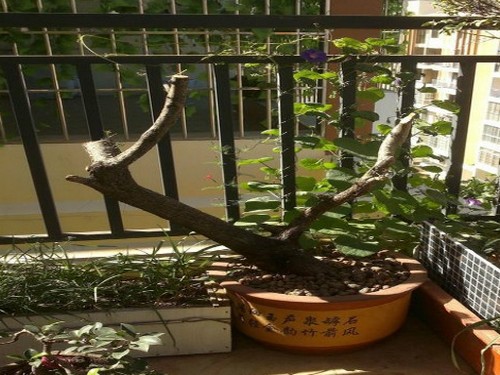
The propagation method of black locust trees generally adopts seed propagation. Sowing black locust trees requires that after seed collection, the seeds undergo procedures such as sun drying and removal of fruit skins, shriveled grains and impurities, so as to obtain pure seeds. When sowing black locust trees, choose a place with good irrigation and drainage conditions, and the soil should be fertile; sandy loam is the best soil for raising seedlings. Sowing of black locust trees is mainly done in spring; in arid areas, sowing can be chosen during the rainy season.
Black locust can be used for afforestation through sowing, but it is generally sown in March, when the temperature is low, which is beneficial to seed germination, and before sowing, seed pre-germination treatment is also required.
Seed soaking: The seed coat of black locust is thick and hard, with poor water permeability. In order to improve the germination rate, shorten the germination period, and achieve uniform seedling emergence, seed treatment must be carried out before sowing. Pour hot water of about 55°C into a container holding the seeds, stirring while pouring, until it is no longer hot to the hand, soak overnight, and use a sieve to scoop out the seeds that have already swollen. Treat the remaining hard seeds that have not swollen with water of about 85°C for 1 to 2 times, until the vast majority of seeds have swollen. If there are still hard seeds that are very difficult to swell, wrap them in gauze and place them in boiling water for 10 s, lift them out quickly, and then soak them in cold water overnight.
Sowing: Generally sow in March, when the temperature is low, which is beneficial to seed germination. Before sowing, drench the containers filled with nutrient soil thoroughly with water so that the soil settles. Some containers have a lot of nutrient soil; use a stick to poke a hole and sow the pre-germinated seeds into the container, sowing 3 seeds in each container. Then evenly sprinkle fine soft sand on top of the container, covering with soil to the extent that the seeds cannot be seen.
Pre-germination: In order to make the seeds germinate uniformly and emerge quickly, pre-germination should be carried out before sowing. Place the swollen seeds in a bamboo basket, cover with a wet towel or wet cloth, and place in a ventilated, sunny or warm place. Rinse the seeds with clean water 2 times a day. After about 5 d, when 1/3 of the seeds have cracked open and shown white, they can be sown.