How to Propagate Pansies? Detailed Methods and Precautions
Pansies were originally perennial herbaceous plants, but after cultivation they have become annual or biennial herbaceous flowers that need to be sown every year. Common propagation methods for pansies include seed sowing, cuttings, and division. There are strict requirements for the sowing time. Let's look at the specific propagation methods and precautions!
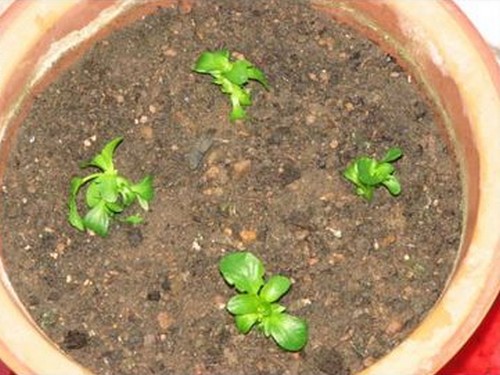
[Seed Propagation]
Sowing in autumn in September is best. Each gram contains 700 seeds. The suitable germination temperature is 13°C to 16°C. Germination occurs 12-15 days after sowing, and it takes about 100-110 days from sowing to flowering.
[Cutting Propagation]
Carried out in May-June. Cut off the shoots sprouting from the base of the plant and insert them into peat, keeping the air moist. Roots form 15-20 days after insertion, with a high survival rate.
[Division Propagation]
Usually carried out after flowering. Cut off the lateral branches with adventitious roots or the new rooted shoots sprouting from the rhizome area. They can be directly potted and placed in a semi-shaded spot to recover.
[Pansy Cultivation Precautions]
1. Temperature
The suitable germination temperature for pansies is 18-21°C. Germination occurs in 7-10 days under light-free conditions. The growing temperature is 10-13°C. Flowering occurs 14-15 weeks after sowing. If the temperature is too high during sowing, it will affect seed germination and seedling growth, resulting in a low survival rate of seedlings. During the growth stage of pansy seedlings, the soil temperature should be 15-24°C. The lower the temperature, the slower the plant grows, and the sturdier the plant becomes.
2. Light
After sowing pansies, cover the seeds with vermiculite, keep the soil temperature at 18-24°C, and keep the medium moist. No light is needed before the radicle emerges. Seedlings generally emerge in 7-14 days.
3. Watering
Before watering, let the soil dry out completely, but avoid permanent wilting of the plant. This benefits the root growth of pansies. The soil pH should be kept at 5.5-5.8, and some N fertilizer or potassium nitrate fertilizer should be applied alternately.
Pansies are flowers that prefer cool conditions and are relatively cold-tolerant. The seed germination temperature is 15°C-20°C. They germinate about 10 days after sowing. When they grow to 3-5 leaves, they can be transplanted with a soil ball. The suitable growing temperature is around 10°C-20°C, and it takes 3-4 months from sowing to flowering. Seed germination requires dark conditions, so after sowing, cover with soil, sprinkle with water, and place in a dark spot. After potting and transplanting, they need to be placed in a shaded spot to recover for 1 week, then moved to a sunny spot.
Pansies are mainly propagated by seed, and tissue culture propagation is also possible. Seed propagation has three working procedures: seed collection, sowing, and transplanting.
1. Seed Collection
When pansies flower, they hang downward. When the fruit matures, it turns upward. When the fruit skin turns white, harvest immediately, otherwise the capsule will dry in the sun and split open, ejecting and scattering the seeds. The harvested seeds must be dried and stored.
2. Sowing
In the Yangtze River basin, sowing is generally done at the end of August and the beginning of September. Choose a plot of sandy loam soil with sufficient light and good drainage as the seedling bed site, prepare it into a seedbed, level it, and then sow. Shallow clay pots can also be used for sowing. The covering soil thickness is 2~3 times the diameter of the seed. After sowing, water thoroughly once and provide appropriate shade immediately. When the seedlings emerge completely, remove the shading material.
3. Transplanting
When the seedlings grow 3 true leaves, they can be transplanted into small pots or a seedbed for cultivation. The plant and row spacing for seedbed cultivation is about 4 cm x 5 cm. When the seedlings grow 8 true leaves, a second transplanting can be carried out, planting them into flowerbeds, flower borders, or large clay pots with a diameter of 12-15 cm, with 3 plants per pot. The plant and row spacing in flowerbeds is 15 cm × 20 cm. Before transplanting, apply a diluted fertilizer solution once and transplant with the fertilizer solution, which can improve the survival rate.