Complete Analysis of the Key Techniques for Red Twig Dogwood Cutting Propagation
In autumn, the stems of red twig dogwood turn from green to yellow, and as temperatures drop the yellow gradually deepens, becoming golden yellow; after snow, under bright sunlight it is extremely vivid and eye-catching, with the colour appearing brightest in side light, while in backlight a hint of green shows through the yellow; it is cold-tolerant, drought-resistant, resistant to wind damage, tolerant of waterlogging, has no obvious diseases, adapts to various soils and environmental conditions, and has strong adaptability, making it an excellent winter variety for viewing branches and stems! It can be used for isolation belts, hedges or as accents on lawns, and is suitable for strip planting, colour-block combination planting, group planting or specimen planting; planting it together with red-stemmed products produces an even better effect.
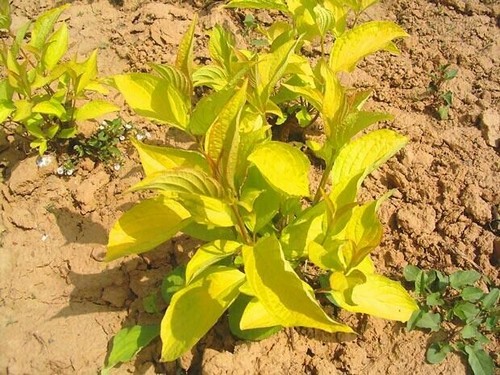
Before cutting propagation of red twig dogwood there is a lot of preparatory work, such as collecting the cuttings, cutting the cuttings to length, treating the cuttings, promoting root formation, building the frame, and making the bed. Here we will only briefly introduce the treatment of the cuttings; the other steps will be described in detail in other chapters.
Treatment of the cuttings: after cutting the red twig dogwood branches, tie every 50 stems into a bundle with the bases aligned and the tops uneven, then treat them in water in a flat-bottomed container with a water depth of 5-6 cm for 3 days and nights. When the water temperature is below 8 degrees C, 6-8 h is suitable; when above 8 degrees C, 3-4 h is suitable. Below we focus on introducing the key technical points related to red twig dogwood cutting propagation.
1. Cutting conditions: only after the frame is built, the shade net is covered, the bed is made and water is thoroughly applied can the cuttings that have been inverted and root-promoted for 20-30 d be lifted out for upright insertion. If the shade net has not yet been covered, or water cannot be supplied in time, or fine sand is used instead of coarse sand for the cutting bed medium, then carrying out the cuttings will directly affect the rooting rate. Therefore, cutting must only be carried out once the conditions are in place.
2. Cutting requirements: on a bed surface 120 cm wide, with a row spacing of 10 cm and a plant spacing of 4 cm, insert 30 stems per row, and insert 10 rows per metre of bed surface. The insertion angle is 75°, with the tip pointing north and the upper bud facing south, and the insertion depth should be such that the middle bud is level with the bed surface.
3. Management after cutting:
Watering: water the bed surface on the same day after cutting is finished, and each watering must be sufficient to produce 2-3 cm of standing water on the paths. Water once each morning and evening. During inspection, if the sand layer on the bed surface is dry, water promptly.
Spraying: after cutting, spray a fungicide once every half month; the spray must be applied evenly, and usually 3 sprays are sufficient.
Topdressing: red twig dogwood is a tree species that roots relatively slowly from cuttings, generally requiring 60-90 d, with some taking more than 100 d. About 15 d after cutting, red twig dogwood begins to break green and produce leaves. Therefore, if foliar topdressing is not carried out, relying solely on the nutrients of the cutting itself to promote rooting will not work. For this reason, after leaf expansion, begin using 1% glucose or sucrose solution about every 10 d, starting at 4 o'clock in the afternoon, for foliar spraying. One month after leaf expansion, use 0.5% urea plus an appropriate amount of trace elements such as zinc, boron, magnesium and manganese, plus ABT solution, for foliar spraying once every half month, to supplement nutrients, keep the leaves fresh, protect them and increase chlorophyll content, and promote rooting.
Temperature and humidity: keep the temperature inside the frame below 28 degrees C, and take cooling measures promptly when it exceeds 30 degrees C; the humidity inside the frame should reach 85%-95%, and when it falls below 75%, effective measures should be taken promptly to raise the humidity inside the frame.
Care and management: promptly remove bulging and flowering inflorescences, and remove weeds at any time. Through the practice of red twig dogwood cutting propagation, we have deeply realised:
The preparatory work before cutting is the foundation; doing well the things that must be done during cutting is the key; and managing the cutting bed well after cutting is the guarantee. About 60 d after cutting, more than one third of the stems have rooted; at this point choose to transplant after rain, pick out and discard the stems whose bases have turned black from pathogen infection, and lift out the stems with fresh leaves that have formed callus tissue but have not yet rooted and re-insert them for cutting. Then spray ABT solution plus trace element fertiliser on the leaves and continue normal management. After about another 40 d most have produced roots; at this time again choose to transplant when the ground is moist after rain, and after about another 30 d for the remaining part, pick out the rooted ones and transplant them, discarding the rest.