What are the propagation methods for Calendula? This one article teaches you to master them easily
Calendula (Calendula officinalis) has a very strong resistance to sulfur dioxide and also has some resistance to cyanide and hydrogen sulfide, making it an excellent pollution-resistant flower. It is also a major material for spring flower beds and can be used as a cut flower and potted plant. It is suitable for central plazas, flower beds and flower borders, and can also be used as an edging flower for lawns or for potted display. Long-stemmed large-flowered varieties can be used as cut flowers.
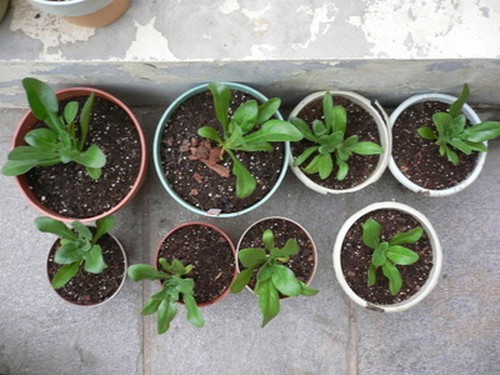
The main propagation method is sowing, and it can also reproduce by self-seeding. For sowing propagation, it is usually sown in autumn (mid to late September) or sown in a greenhouse in early spring. The optimum germination temperature is 20-22°C. After sowing, cover with a thin layer of soil, and germination occurs in about 7-10 days. When the seedlings grow 3-4 true leaves, transplant them for the first time. After the seedlings grow 5-6 true leaves, plant them in flower pots of a suitable size. If autumn sowing encounters a cold wave and low temperatures, you can wrap the flower pot with plastic film to help keep it warm and moist.
Calendula has 100-125 seeds per gram. The optimum germination temperature is 20-22°C. The soil for pot sowing needs to be sterilized. After sowing, cover with 3 mm of soil, and germination occurs in about 7-10 days. The seed germination rate is 80%-85%. Water thoroughly, and after the water drains down, cover with about 1 cm of soil. Maintain good sunlight. Before the seedlings emerge, the surface soil must not dry out; spray water to keep it moist.
After emergence, maintain good ventilation and light, and control the frequency of watering. Water thoroughly only after the soil has dried out.
Autumn sowing is often carried out after mid to late September: Substrate sterilization Sterilize the substrate used for sowing. The best method is to put it in a pot and heat it until hot, so that any pests and diseases are killed by the heat.
For tiny seeds that are difficult to pick up with your hands or other tools, you can moisten one end of a toothpick with water and stick the seeds one by one onto the surface of the substrate, then cover with 1 cm of substrate. Then place the sowing pot into water, with the water depth at 1/2-2/3 of the pot's height, and let the water slowly soak upward (this method is called the “pot soaking method”).
Stratification: Soak the seeds in warm hot water (at a temperature similar to face-washing water) for 3-10 hours, until the seeds absorb water and swell. For very common seeds that germinate easily, this step can be skipped.
In addition, Calendula can also be propagated by cuttings.
Cutting substrate: This refers to the nutrient soil, river sand, peat soil and other materials used for cuttings. For home cuttings, due to limited conditions, it is difficult to obtain an ideal cutting substrate. It is recommended to use the already prepared and sterilized cutting substrate provided by this site; medium-coarse river sand can also be used, but it should be rinsed several times with clean water before use. Do not use sea sand or river sand from saline-alkali areas, as they are not suitable for the growth of flowers and plants.
Selection of cutting branches: The branches used for cuttings are called cuttings shoots. Usually, in combination with pinching, the thick, pest-free top shoots that are pinched off are used as cuttings shoots, and the top shoots are used directly for cuttings.