Detailed Explanation of Key Points on Japanese Late Cherry Propagation Techniques
When cherry blossoms are mentioned, most people probably think of the cherry blossoms seen everywhere in Japan in spring. But few know that cherry blossoms are divided into early cherry and late cherry. Early cherry is charming and gorgeous, and after a brief brilliance it soon withers, achieving a “magnificent” life. But late cherry has heavy, graceful flowers and a long flowering period, which early cherry cannot match. It is now widely used in gardens and urban greening. Next, the editor will explain the propagation techniques of Japanese cherry.
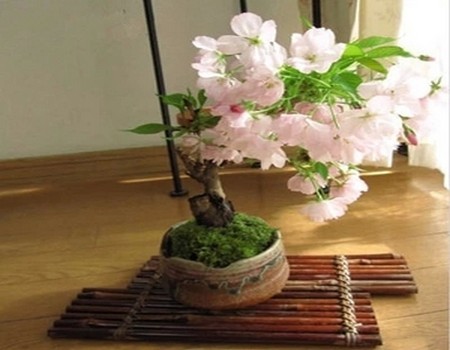
This tree species has quite a few horticultural varieties, with double-petaled pink varieties being the finest. Its seeds are very few, and rooting from branch cuttings is also very difficult, so the propagation coefficient is small, limiting its application in gardens. Previous studies have not achieved breakthrough progress in increasing the propagation coefficient of Japanese late cherry. The difficulty of rooting cuttings of Prunus plants may be related to the accumulation of inert substances in dormant branches. To explore suitable methods for propagating Japanese late cherry, non-test-tube rapid propagation technology was used for rapid propagation.
Japanese late cherry is mainly propagated by grafting, and can also be propagated by layering and cuttings, but the survival rate is low. Grafting mainly uses seedlings of cherry, mountain cherry, peach, apricot, etc. as rootstock, using bud grafting and branch grafting. Branch grafting generally uses cut grafting or cleft grafting, carried out in spring before germination in March, and the cut grafting method has the highest survival rate.
Propagation techniques for Japanese late cherry:
For the selection of seedling bed soil, expanded vermiculite is generally better. A vermiculite seedling bed has a small day-night temperature difference and large accumulated temperature, with good insulation effect, which is beneficial to root growth. Then select a 15 cm long branch from a robust mother tree, with the upper end bearing a new shoot of the current year and the lower end being a one-year-old branch, as the cutting seedling. Cuttings taken during the full flowering period of cherry have the highest survival rate.
On the bottom layer of a seedling bed built with bricks, spread 2 to 3 cm of river sand, then fill in 15 cm thick vermiculite. Install 1 centrifugal sprinkler every 1 m. When the weather turns hot, shade appropriately and spray water frequently to ensure humidity. Branches can be used around as a fence to block wind. Insert the cuttings vertically in rows into the vermiculite, with a plant spacing of 2 cm and a row spacing of 4 cm, and water thoroughly after insertion. A cutting depth of 6 to 8 cm is suitable.
Management of Japanese late cherry:
After cutting, field water and fertilizer management should be strengthened, acidic fertilizer should be applied reasonably, and a good drainage system should be ensured. For pests and diseases, prevention should be primary, with chemical treatment as a supplement.
Common pests harming Japanese late cherry include: brown marmorated stink bug, peach aphid, carrot willow aphid, apple yellow aphid, Japanese felt scale, wisteria mealybug, etc. If they occur, 3% high-permeability fenoxycarb emulsifiable concentrate 3000-fold solution can be sprayed to kill brown marmorated stink bug; 10% imidacloprid wettable granules 2000-fold solution can be sprayed to kill peach aphid, carrot willow aphid, and apple yellow aphid.