How to prune a ginkgo bonsai? A detailed explanation of the key pruning techniques
Pruning is one of the main techniques for creating a ginkgo bonsai. Its purpose is to highlight the trunk, fill out the ornamental branches, express various different moods, and raise the artistic value, making it natural and aged, elegant and understated. The principle is to cut away excess side branches, parallel branches, crossing branches, overly dense branches, leggy branches and diseased or dead branches.
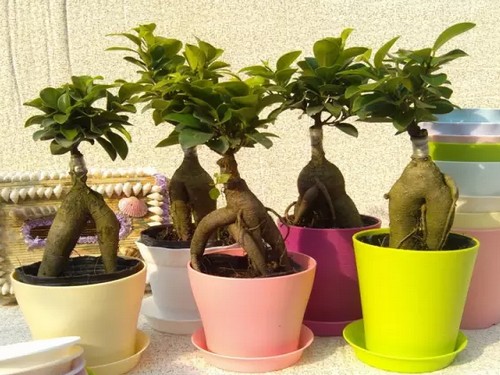
There are three basic pruning methods: short pruning, thinning pruning and reduction pruning.
1. Short pruning means cutting a branch short to stimulate the lateral buds below the cut to sprout, forming stronger side branches, and at the same time giving a tendency to cluster, which makes shaping easier; after cutting, secondary buds often sprout, increasing the number of branching orders. Pruning the trunk is done to control the height of the tree and encourage side branches to develop. Short pruning the side branches is done to encourage latent buds to sprout.
2. Thinning pruning means cutting a branch away from its base. The main targets are dead branches, diseased and pest-infested branches, and excess or overly dense branches unsuitable for shaping, so that the remaining branches get sufficient nutrients and grow strong.
3. Reduction pruning means cutting away part of a branch. It can reduce the size of a root-sucker shoot or a seedling plant, which helps it survive; it can also encourage new branches to sprout, restoring the vigour of an aged stump.
Choose a suitable clay pot, fill it with coarse and fine soil, and plant the stump in the pot during February to March. During the growing period, bend and tie the branches and trunk into curved or straight, slanting or upright, upward or downward forms, and control their direction and orientation of growth well.
The purpose of pruning is to highlight the trunk, fill out the ornamental branches and raise the artistic value. The principle of pruning is to cut away excess side branches, parallel branches, crossing branches, overly dense branches, leggy branches and diseased or dead branches.
The first year is the foundation for developing the stump. In summer, strong vigorous branches grow quickly, so they can be reduction-pruned on two branches. The secondary branches produced after the stimulus of pruning should be cut off promptly. New branches that grow in late summer and early autumn can be kept. After leaf fall in winter and before budding the following year, all excess branches such as whorled branches, crossing branches and overly long branches should be cut away without exception. Sucker shoots growing from the base of the stump should be cut off promptly.
The second year is for wrapping wire and splitting the trunk to create scars. When wrapping, prevent the branch and trunk from breaking or tearing apart; if the base of the trunk is fairly hard, when shaping and bending it you should wrap it spirally from the base with hemp rope or plastic tape to prevent tearing during bending. You can also split the middle and lower part of the trunk with an axe, deep to the pith, which can further add to the steep and majestic feel of the bonsai.
In the third year, when the trunk is thick, the plant tall, the crown large and the roots deep, it must be moved into a larger pot, filled with enough fertile soil, and at the same time the crown-forming technique should be done well. The method is: cut a rounded ring along the trunk, then spread the side branches out in all directions.
In the fourth year the branches gradually increase and the plant's form tends to stabilise, so it can be planted into the display pot, and then further processed and shaped; according to the original design plan, create a bonsai of a thousand postures and a hundred attitudes, each with a different spirit.