What are the propagation methods for Bleeding Heart Vine?
Bleeding Heart Vine has unusual flower shapes and abundant blooms, making it suitable for potted ornamental display. It can be used as a courtyard cultivation tree species and is also a good potted flowering plant. Its branches are soft and its leaves are sparse; tying a memorial-arch-style flower frame to guide its branches to climb, when it blooms, the red corolla protrudes beyond the white calyx tube, like a coiled dragon spitting pearls. Propagation is commonly done mainly by cuttings; stem cuttings, bud cuttings and root cuttings can all take root.
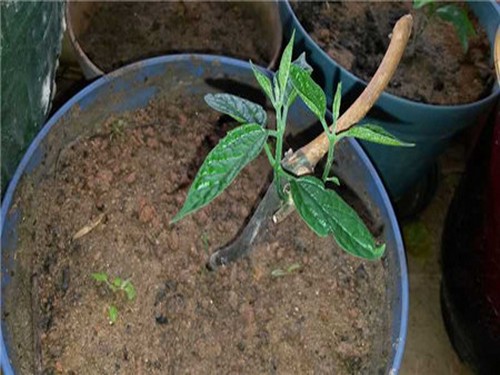
[Seed Propagation]
Sowing is usually carried out from March to April. The seeds are relatively large; use indoor sowing pots, keep the room temperature at 24°C, and about 10 days after sowing they will germinate successively and emerge. When the seedlings are 10 cm tall, move them into small pots for care, and they can bloom the following year.
Seed propagation is carried out in early spring. Because the seeds are relatively large, they can be sown in spots at a spacing of 3-5 cm, at a temperature of 24°C. They can germinate in about 10 days. After emergence, if the seedlings are too dense, they can be thinned and transplanted. When the seedlings are 10 cm tall, plant them in small flower pots, 1-3 plants per pot, and they can bloom the following year. When the new shoots grow to 4-5 cm long, pinch them promptly to encourage branching.
[Division Propagation]
After flowering, dig up the new shoots sprouting from the underground stolons, pot them directly with roots, and place them in a semi-shaded spot for care.
[Cutting Propagation]
Stem cuttings, bud cuttings and root cuttings are all acceptable. For stem cuttings, choose the tender tips of robust, disease-free branches, or cut the lower old branches into 8-10 cm stem sections as cuttings. Bud grafting is done by taking the lateral buds on the branches with a portion of xylem as cuttings. Root cuttings are made by cutting the root-like stolons into 8-10 cm lengths as cuttings. The cutting bed can use substrates such as peat, perlite, leaf mold, river sand and vermiculite. Spring and autumn are the best times for cuttings. The suitable temperature for cuttings is 21°C, and a cutting bed temperature of 26°C is very favorable for rooting. They can root 3 weeks after cutting. If the base of the cuttings is treated with a 0.5%-0.8% indolebutyric acid solution for 1-2 seconds, they can root faster and in greater numbers.
For stem cuttings, choose the tender tips of robust, disease-free branches, or cut the lower old branches into 8-10 cm stem sections as cuttings, insert them into a plain sand pot to a depth of 3-4 cm. After cutting, water thoroughly and place in a lightly shaded, high-humidity spot, keep the pot soil moist, maintain the temperature at 20-25°C, and they can root in about 3 weeks. Bud cuttings are made by taking the lateral buds on the branches with a portion of xylem as cuttings. Root cuttings are made when repotting, by cutting the root-like stolons below the soil into 8-10 cm sections as cuttings.