A Detailed Guide to the Steps and Methods of Sowing Flower Seeds
Different flowers have different seeds, because their light requirements differ; some tiny seeds do not need to be covered with soil when sown, while some larger seeds do need covering. Generally speaking, tiny seeds are light-loving and do not need covering, while large seeds dislike light, so the seeds must be covered with soil to bury them, and before germination it is best to place them in a cool, dark place. (For example, petunia dislikes light, so the plastic film used as a cover can be black film.)
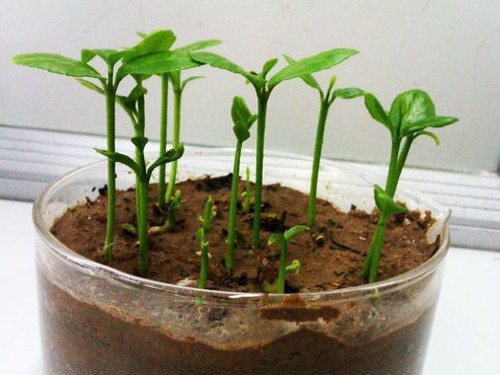
One important factor that must be considered when sowing is: the season. Different flowers and plants have different sowing seasons, generally spring and autumn, and some can only be sown in autumn or spring.
Determining the sowing time is one of the important steps in seedling raising. It can affect the growth period of the seedlings, the adaptability of the young plants to the environment, land use, and the maintenance and management measures for the seedlings. A suitable sowing period can prompt the seeds to germinate earlier, increase the germination rate, and produce neat emergence, robust plant growth, strong stress resistance, savings in land and labor, and also high-quality seedling products. For garden plants, the sowing time must be determined according to the growth and development characteristics of various flowers, the different environmental requirements of the flowers, the planned flowering time, local environmental conditions and cultivation facilities. The main advantages and disadvantages of sowing in each season are as follows:
Spring sowing takes a short time from sowing to emergence, which can reduce cultivation and management; in spring the soil is moist, not compacted, and the temperature is suitable, which is good for seed germination and neat emergence; after the seedlings emerge, the temperature gradually rises, which can avoid the harm of low temperatures and frost and reduce damage to the seeds by birds and insects.
Autumn sowing allows the seeds to pass through the dormancy period in the cultivation site and complete the pre-sowing germination-promotion stage; in the following spring the seedlings emerge early and neatly, extending the growth period of the seedlings, making the young plants grow robustly, increasing the seedling survival rate, and enhancing cold resistance; it not only reduces the storage and germination treatment of seeds, but also eases the conflict of busy spring work and labor shortages. Because autumn-sown seedlings emerge early, attention must be paid to preventing damage from late frost.
1. Sowing density
When sowing in cell trays, 1 or more seeds can be sown per cell according to the actual situation. When sowing in seedling trays, for common varieties 1-2 thousand seeds can be sown per square meter. First divide the seeds evenly into several portions according to the area of the seedling tray, with one portion per tray.
2. Sowing
Larger seeds can be evenly broadcast on the substrate, or sown in rows; smaller seeds such as petunia and snapdragon can first be mixed evenly with clean fine sand and then sown. Especially large seeds such as sweet pea and cyclamen can be sown in individual spots.
3. Sowing depth and soil covering
The sowing depth is determined by the size of the seed and the seed's light requirement for germination. Generally, the sowing depth of seeds is 2-3 times the diameter of the seed. Some varieties, such as petunia, Torenia, Pentas and wax begonia, need light to germinate and do not need to be covered with substrate; they are sown directly on the soil surface. Some varieties need light covering, such as scarlet sage, snapdragon and Cuphea. Some seeds should be covered slightly more thickly and sown deeper, such as ornamental millet. The recommended covering material is coarse vermiculite, which has very good water retention and air permeability.
4. Spraying water
After sowing or after covering, spray water once more with a fine mist nozzle, watering thoroughly, so that the seeds make full contact with the substrate and covering material.
5. Covering
Covering the sowing tray with glass, plastic mulch or plastic film can maintain air humidity and in winter can also keep and raise warmth. In summer the film may be omitted, and if covered, it must not be sealed; both sides must be ventilated.
6. Shading
If sowing in summer, shading must be provided, otherwise the light is too strong and water evaporates vigorously, which will affect seed germination.
General seed sowing method:
1. Choose loose, breathable soil (generally fine peat, grass peat or leaf mold) and put it into a flower pot or sowing tray.
3. Water the soil thoroughly and sprinkle the seeds evenly on the soil layer (you can also soak the pot after sowing).
4. Fine seeds (such as thyme, petunia, cineraria and begonia seeds) do not need to be covered with soil when sown, but care must be taken to maintain soil moisture; use a fine-spout spray bottle to spray misted water to keep it moist. A strong stream of water can easily wash the seeds away or wash them deep into the soil layer, and fine seeds are not easy to push up through the soil and emerge. Large seeds must be covered with soil to a thickness 2-3 times the size of the seed.
5. The suitable germination temperature for most seeds is 20-25 degrees; note that some seeds can only germinate under low-temperature conditions, such as Persian buttercup and delphinium; for most herbs and seeds sown in autumn and winter, the temperature should not be higher than 25 degrees, and for seeds sown in spring and summer it should not be lower than 20 degrees. If the temperature cannot be reached, use plastic wrap to raise the temperature; plastic wrap also has a moisture-retaining effect. In summer, all seeds should be placed in a cool place, shaded from light and rain; in winter, attention must be paid to keeping warm and preventing frost. Before seeds germinate they have not yet grown roots and need artificial supplementary water to sustain life; the soil must be kept moist but not waterlogged.
6. If covered with plastic wrap, remove it promptly after the seeds germinate, promptly move the flower pot to a place with scattered light to receive light, and after the seeds germinate promptly apply some liquid fertilizer, for example monopotassium phosphate at a concentration of about 200 times; the concentration should not be too high. After they grow a bit larger, fertilize according to the plant's growth condition.
7. When the seedlings grow to 2-3 leaves they can be transplanted, and at 5-6 leaves they should be planted out promptly. Before planting out, put a little decomposed organic fertilizer (for homemade organic fertilizer see this) and slow-release granular fertilizer (such as compound fertilizer) in the flower pot.