How to propagate scarlet sage? Detailed introduction to propagation methods
Scarlet sage is also very commonly cultivated internationally, especially in European and American countries and Japan, where it is a very important ornamental flower. American companies such as Goldsmith Seeds, Italy's Famen Company, France's Bodger Company and Britain's Floranova Company, among others, sell a considerable amount of scarlet sage seed every year. At the same time, new varieties are constantly coming onto the market, especially dwarf potted varieties, which are updated extremely quickly.
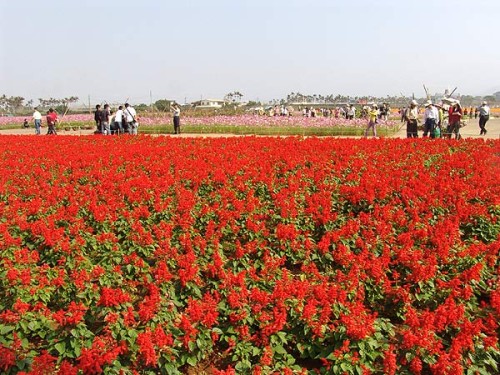
Probably because its flowering period is really long, from July to November, it remains a bright red cluster the whole time, and its inflorescences are slender; planted in mass, it is very spectacular. So this plant, native to Brazil, has become the most commonly cultivated herbaceous flower in gardens. Of course, another reason is that it is easy to care for: after sowing, it does not need much management, and as long as the sunlight is reasonable, neither too strong nor too weak, it blooms very well.
1. Sowing method
In mid-March, sow in a greenhouse using seedling trays or plug trays. The substrate is prepared nutrient soil or sieved vermiculite. If the seedling substrate is reused, disinfect it with 5‰ potassium permanganate. Before sowing, soak the seeds in warm water at about 40°C for a day and a night, then rinse them clean with fresh water and mix in fine sand for later use. After compacting and leveling the seedling substrate, sow the seeds evenly by dibbling, with a plant and row spacing of 2 cm×2 cm. After sowing, cover the seeds with sand, add water by the soaking-pot method, cover with glass, and place in a shaded place, maintaining a certain humidity. Before the seeds germinate, often check whether the substrate is dry or wet; cover with glass during the day and remove it at night to allow ventilation. The optimum temperature for seed germination is 21-24°C, and the seedlings emerge completely in 12-15 days. After the seeds germinate and the seedlings emerge, remove the glass and move them to a sunny place, control moisture, and provide appropriate shade to prevent leggy growth. To ensure the humidity of the substrate, it must be sprayed with a fine-nozzle watering can; do not irrigate with a large flow of water, to prevent knocking over the seedlings. After the true leaves appear, apply dilute fertilizer water once. For seedlings sown in open-field seedbeds, thin them out in time and water them at the appropriate time.
The flowering period can be controlled by adjusting the sowing time. The sowing time can be determined according to the desired flowering period. If you want it to bloom for "May Day", sow in mid-to-late August of the previous year, overwinter in a greenhouse, and move it outdoors at the end of April the following year. If you want it to bloom for "National Day", sow in a greenhouse in mid-March of the current year.
2. Cutting method
For propagation by cuttings, it can be done in the open field from June to July, or in a greenhouse in October. Open-field cuttings need shade. For cuttings in a greenhouse, keep the room temperature between 20-25°C. Generally, as long as the soil is kept moist, cuttings can take root after 20 days, and after one month they can be divided and potted or planted out in the open field.