How to propagate bougainvillea in pots by cuttings? Detailed step-by-step guide with illustrations
Bougainvillea is strikingly beautiful and richly fragrant, with a tree full of blooms in a distinctive red. Whose balcony basks in the warm sun, where looking closely at the bougainvillea branches, flowers layer upon layer. Passionate, unyieldingly resilient, tenaciously striving; everywhere you look, the vivid purples and reds of bougainvillea, leaves linked to leaves, branches linked to branches, bright and fervent, at the peak of their most splendid and colorful bloom, among the reds and purples you can scarcely find a trace of green leaves. Yet, for such a passionate and uninhibited flower, its flower language is “without true love, it is a kind of sorrow.”
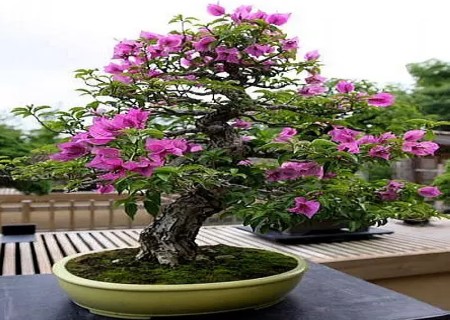
Bougainvillea comes in many varieties, with beautiful leaves and gorgeous flowers, and on top of that, an exceptionally long blooming period and tolerance for drought and heat, making it the top choice for balcony gardeners. The main propagation method for bougainvillea is cuttings, with a high survival rate. Let's take a look at the bougainvillea cutting method together with the editor!
1. Soil preparation
First, prepare the cutting medium. (Vermiculite, perlite, peat, 1:1:1. Sand, plain sandy loam, etc. can also be used.)
Add a small amount of cinder to the growing soil. Before cutting, sieve the cinder, select particles about 2 to 5 mm in size, soak in boiling water, and disinfect. Drain until no longer dripping, then mix thoroughly and set aside.
2. Prepare the pots
If you need to propagate many pots, you can use simple plastic pots, and repot after successful rooting. After choosing the pots, fill them with soil. You can also place a thin layer of elastic wadding or cotton at the bottom of the pot.
After filling with soil, water thoroughly, place in the sun, and let dry for later use.
3. Taking cuttings
Cut sun-facing branches as cuttings; new branches are best with a bit of old wood. After June, semi-lignified new branches do not need to include old wood. When cutting the cuttings, old branches should be thick, and new branches should have leaves.
Use a sharp knife to cut off the cutting. For large leaves, leave two half-leaves; for small leaves, leave two leaves and one bud. The length is about 7-10 cm. The base of the cut branch has an uneven cut surface and damaged tissue; use a sharp knife to trim away the damaged tissue, and with one cut shape the base into a slanted surface. The picture below shows the prepared branches.
4. Soaking the branches
Prepare rooting powder according to the instructions, and soak the base of the cuttings.
5. Cutting method
Use a clean (sterilized) wooden stick to make slanted holes, 7-8 cm deep, then insert the cuttings, leaving the leaf nodes exposed.
After planting a pot, water thoroughly so the medium closely contacts the base of the cuttings, cover with plastic wrap to retain moisture, with ventilation holes on top, and place in a location with indirect light for care.
The seedlings have rooted; transplant into pots.
Generally, bougainvillea can be propagated by cuttings all year round, but the survival rate is highest with spring cuttings. Flower lovers who like it might as well give it a try.
Precautions for bougainvillea cuttings:
1. Try every means to reduce the bacterial content of the cutting medium (sand, coal cinder, soil, etc.). Sand can be disinfected by various methods, such as sun exposure, pouring boiling water, sterilizing with potassium permanganate or carbendazim, etc. Use fresh coal cinder. When cutting along the edge of the pot, minimize the use of undecomposed organic fertilizer and high-concentration chemical fertilizer, to reduce the chance of bacteria and root damage.
2. Be careful to place it in a cool place to reduce water evaporation.
3. Be careful to keep it moist, but not with too much water; too much water easily breeds mold and is not conducive to rooting.