Detailed explanation of the propagation and seedling-raising techniques for Ligustrum quihoui, master the methods to cultivate strong seedlings
Ligustrum quihoui belongs to the Oleaceae family, Ligustrum genus, and is an evergreen or semi-evergreen shrub. Also known as small-leaf privet and small white wax tree. It is a hedge material in gardens and can serve as rootstock for trees such as osmanthus and lilac. It is vigorous, cold-resistant; strongly suckering; tolerant of pruning. It can be propagated by sowing, cuttings, and division, but sowing propagation is the main method.
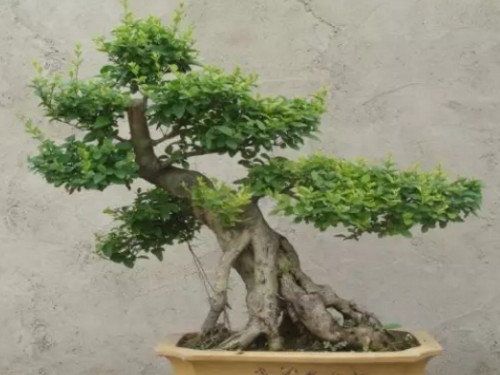
1. Sowing and seedling raising: In October-November, when the drupe turns purplish-black, it can be harvested. Sow immediately after harvest, or dry-store after sun-drying until March of the following year for sowing. Before sowing, soak the seeds in warm water for 1-2 days, and sow once the seeds have swollen after soaking. Use drill sowing, with a row spacing of 30CM, a sowing width of 5-10CM, and a depth of 2CM. After sowing, cover with fine soil, then cover with rice straw. Pay attention to watering and keep the soil moist. After the seedlings emerge, gradually remove the rice straw, and when the branches and leaves slightly spread, apply light fertilizer. When the seedlings are 3-5CM tall, thin them to a plant spacing of 10CM. Seedlings generally grow slowly, and 2-year-old plants can be used as hedges.
2. Cutting propagation: Cuttings can be taken in March---April or August-September. For spring cuttings, take current-year branches in early winter, cut them into 15-20CM lengths, then store them in sand. After 3-4 months of sand storage, callus tissue can form, and when cuttings are taken in the following spring, they are relatively easy to root. Soaking the branches in naphthalene acetic acid increases the survival rate by about one time. The planting spacing for cuttings is 20×30CM, with a depth of 2/3 of the cutting length. Water frequently after cutting to maintain appropriate humidity. Cuttings that have undergone sand storage can root one month after spring cutting. Autumn cuttings cannot root in the same year; in winter they only form callus tissue, and can only root in the following spring. After survival, manage for one year, transplant before bud break in the following spring, and by the third year they can be used as rootstock. If you want to obtain grafting rootstock one year earlier, select relatively thick one-year-old branches in autumn, cut them into cuttings about 25CM long, store them in sand, and in the following spring insert them at a spacing of 30×30CM; they can root and survive in the same year, and can be used as grafting rootstock in the second year.
3. Division propagation: In spring, cut apart the root suckers with roots and plant them separately in the seedling field, watering at planting. IV. Tending and management: Transplanting is best in February-March of spring, and also possible in autumn. A soil ball is needed, and planting should not be too deep. If planting in the field, apply fertilizer at the bottom of the hole to promote growth. If used as a hedge, pruning can be done appropriately, and attention should be paid to pruning dead, weak, and diseased branches. The main pests include caterpillars, cottony cushion scale, etc., and attention should be paid to their control.
Ligustrum quihoui is a plant of the Oleaceae family, Ligustrum genus. It resists various toxic gases and is an excellent pollution-resistant tree species. It is tolerant of pruning and has strong sprouting ability. The following situations need attention during propagation.
Sowing propagation:
Ligustrum quihoui flowers from July to August, and the fruit ripening period is October to November. When the drupe matures, it is purplish-black and can be harvested. The harvested fruit is piled for after-ripening, washed, and dried in the shade. Then sow in autumn. It can also be dried in the shade and stored dry. Sow in the following spring.
Before sowing, soak the dry-stored seedling seeds in warm water for 1~2 days. Once the seedling seeds have absorbed enough water and swollen, they can be sown. Drill sowing. Row spacing 30 cm. Sowing width 5-10 cm, depth 2-3 cm. After sowing, cover with fine soil, cover with grass, water, and keep the soil moist. After the seedlings emerge. Gradually remove the covering grass. When the branches and leaves slightly spread, apply light fertilizer. When the seedlings are 3-5 cm tall, thin them. Set the seedlings at a plant spacing of 10 cm. The seedlings grow slowly, and management is relatively extensive.
Cutting propagation:
Carry out hardwood cuttings in February-March. Collect current-year branches in autumn, cut them into 15~20 cm lengths as cuttings, and store them in sand. After 3-4 months, callus tissue forms. Cutting in the following spring makes rooting easy. Insert at a plant-row spacing of 20-30 cm, with the insertion depth being 2/3 of the cutting length. After inserting, water thoroughly and keep the soil moist regularly; avoid waterlogging. Roots form 1 month after cutting. Autumn cuttings cannot root in the same year; in winter they can only form callus tissue, and can only root in the following spring.
Softwood cuttings can be carried out in June-July, using semi-lignified branches for cutting.
Division propagation:
Ligustrum quihoui has strong sprouting ability. Many sucker seedlings are produced around the root zone of the mother plant. Before buds sprout in spring, dig out the sucker seedlings around the root zone of the mother plant and plant them separately with roots. Or dig out the entire mother plant, divide it into several clumps with a sharp blade, each clump having 2-3 branches and roots, and plant them in clumps. To improve the survival rate, some aboveground branches and leaves can be trimmed off to reduce water evaporation. Plant at a plant-row spacing of (30-40) cm/(50-60) cm, then water thoroughly. Transplanting: transplanting is suitable in both spring and autumn, with a high survival rate. Transplanting does not require a complete soil ball.
Large seedling cultivation:
Large seedlings of Ligustrum quihoui are generally cultivated into hedgerow shrubs, spherical forms, and natural forms. As a hedge, heavy cutting can be used to promote more branches from the base, forming a full shrub. As a spherical form, repeated exposed-branch pruning can be carried out multiple times in a year according to the spherical outline to form a full sphere. It is worth noting that when Ligustrum quihoui is pruned into a spherical form, it appears relatively loose and sparse, not as dense and compact as the spherical form of Ligustrum sinense. As a natural form, little pruning is needed; simply remove dead branches, overlapping branches, and interfering branches.