Detailed guide to petunia propagation methods, step by step teaching you how to propagate petunias
Morning glory belongs to the Convolvulaceae family, native to tropical Asia and southern China. It has another name——trumpet flower, and is an annual twining herbaceous flowering plant. Morning glory is a toxic plant; the stems, leaves and flowers all contain toxins, with the seeds being the most toxic. Taking an overdose can cause vomiting, diarrhea, abdominal pain, bloody stools and blood in the urine. Petunia, on the other hand, belongs to the Solanaceae family, Petunia genus, also known as winter cherry and lingzhi peony, and is native to South America!
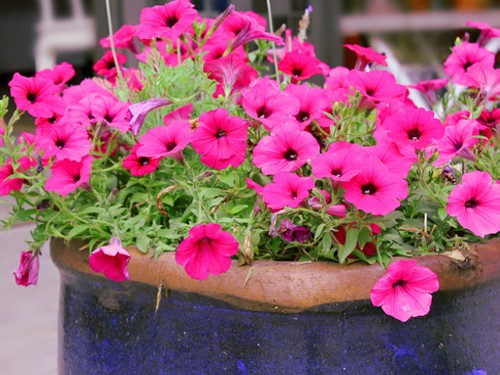
Petunias have many varieties. You may have heard of “Million Bells”; besides that, “Pink Morning Light”, “Small Flowered Network Vein”, “Easy Wave” and others are all very popular varieties. I still remember several flower enthusiasts who sent me pictures showing their various petunias in full bloom at home; they really are beautiful!
The main propagation methods for petunias are as follows:
1. Seed propagation
Petunias are often cultivated as annuals. The sowing time depends on the time to market; for example, if flowers are needed in May, sow in a greenhouse in January. If flowers are needed in October, sow in July. The sowing time should also be adjusted according to different varieties. Petunia seeds are tiny, with 9000-10000 seeds per gram. The suitable germination temperature is 20-22℃. Use indoor pot sowing with a mix of sterilized culture soil, leaf mold and fine sand. After sowing, no soil covering is needed; just press lightly, and germination occurs in about 10 days. When true leaves appear, the room temperature should be 13-15℃.
2. Cutting propagation
Indoor cultivation can be carried out throughout the year. After flowering, cut the sprouted tender top shoots, 10 cm long, and insert them into a sand bed. The cutting medium temperature is 20-25℃. Roots form 15-20 days after cutting, and they can be transplanted into pots after 30 days.
3. Tissue culture propagation
Explants use seeds, leaves and fertilized ovaries, etc. If using seeds, soak them in a detergent solution for 5 minutes, then remove and rinse clean with water. Under sterile conditions, first soak in 75% alcohol for 8 minutes, then soak in 0.1% mercuric chloride solution for 7 minutes, remove and rinse with sterile water, then inoculate on MS medium (with 6-benzylaminopurine 0.5-1.0 mg/L and naphthaleneacetic acid 0.1 mg/L added). Small buds appear 15 days after inoculation. Cut the small buds and transfer them to the original medium for subculture; after 20 days, one small bud can produce more than 10 buds. Transfer 1 cm strong buds onto 1/2 MS medium containing naphthaleneacetic acid 0.05-0.2 mg/L; after 10 days, 100% root and become complete small plantlets.