How to Propagate Black-Eyed Susan
Black-eyed Susan can be propagated by seed, cuttings, and division. So how is black-eyed Susan propagated in each of these ways?
1. Growing black-eyed Susan from seed:
Black-eyed Susan is usually sown in spring and autumn. Sowing in March of spring means it can bloom in June and July; sowing in September of autumn, planting out in November, will produce flowers in May of the following year.
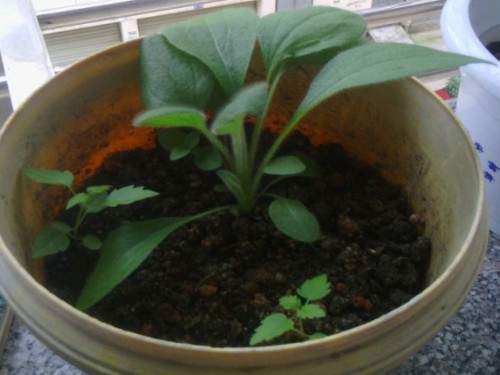
Choose suitable soil for sowing, keep the temperature above 20°C, and it will sprout in about half a month. After caring for it for a period, once the black-eyed Susan seedlings grow to 4——5 leaves, they can be transplanted. Once the black-eyed Susan seedlings have taken, normal care is all that is needed.
To grow black-eyed Susan from seed, seeds need to be collected. Every year in August——September, select mature flower heads of black-eyed Susan and cut them off, dry them in the sun, then place them in a dry, cool place, remove debris and pick out the seeds. The selected seeds can be kept in a dry, dark, well-ventilated place, with the temperature kept at around 5°C——10°C, and can be stored for about one year.
2. Propagating black-eyed Susan by division:
Black-eyed Susan can also be propagated by division, which can be done in both spring and autumn. Division usually means dividing the old plants of several years' growth.
3. Propagating black-eyed Susan by cuttings:
Cuttings are the third method of propagating black-eyed Susan. Cuttings are taken in spring or autumn, and usually the new shoots sprouting from the roots of black-eyed Susan are chosen as the cuttings.
For spring cuttings of black-eyed Susan, they can be taken for rooting when the new sprouts have grown to about 15 cm. For autumn cuttings of black-eyed Susan, they can be taken after the flowering period, once new shoots have sprouted from the roots.
The more commonly used propagation method for black-eyed Susan is growing it from seed.
Sowing: Black-eyed Susan is generally sown in spring and autumn. March in spring and September in autumn are the best sowing times for natural growth. The sowing time is closely related to its natural flowering period: sow in March of spring, and it blooms from June to July; sow in September of autumn, plant out into pots in November, and it blooms the following spring (May to June). To ensure the plants are robust and the flowers large and brightly coloured, transplant once after sowing, when 4 to 5 leaves have grown.
Cuttings: Generally, new shoots sprouting from the roots are chosen as cuttings, and this can be done in either spring or autumn. In spring, it should be done once the new sprouts have grown to about 15 cm; in autumn, after flowering, once new shoots have sprouted from the root area.
Division: This can be done in both spring and autumn, generally by dividing old plants of several years' growth.
[Notes]
(1) Planting depth: When planting, it is better to plant shallowly rather than deeply, with the root crown level with the soil surface. Planting too deeply can easily cause the root crown to rot.
(2) Division: Perennial plants must be divided by force, otherwise their growth will weaken and flowering will be affected.
(3) Seed harvesting: The part harvested is the flower head of black-eyed Susan. Usually between August and September each year, choose flower heads whose achenes are mostly ripe and cut them off, dry them in the sun, then place them in a dry, cool place, remove debris together, and pick out the seeds. Store the seeds in a dry, dark, well-ventilated place at an ambient temperature of 5 to 10°C.