Detailed Explanation of Bud Pinching Techniques for Five-Needle Pine Bonsai
Bonsai is a concrete yet subtle representation of natural scenery, a profound and passionate exploration and reflection of natural beauty. The five-needle pine has an upright posture and is a tree species of high ornamental value; it is suitable both for embellishing gardens and as an important tree species for potted cultivation or bonsai. To maintain a good tree form, control the growth of branches and foliage, and achieve a shape with short, dense and vigorous foliage, regular shaping and pruning are essential.
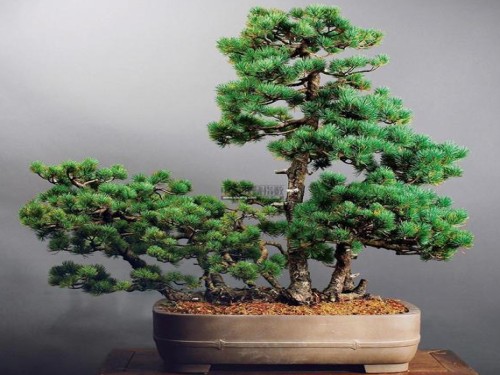
The five-needle pine has sturdy branches, is evergreen throughout the four seasons, and has an elegant, antique posture, making it an excellent bonsai tree species. The five-needle pine has strong sprouting ability, and its branches are pliable and elastic, tolerant of pruning and easy to wire. Wiring and pruning are not only necessary for shaping, but can also control growth and shorten the needles, making the tree form more beautiful.
Bud pinching is an important means of controlling the growth of five-needle pine bonsai and maintaining a beautiful tree form. Bud pinching should be carried out in early spring each year before the new buds elongate and the needles open. When the buds of the five-needle pine sprout and extend, removing 1/2 to 1/3 of the bud can prevent the production of leggy shoots, promote even and robust growth of lateral buds, reduce nutrient consumption, and achieve a vigorous and elegant tree form.
Spring is the time for bud pinching of the five-needle pine, carried out each year in early spring before the new buds elongate and the needles open. Bud pinching is best done on sunny days to facilitate wound healing. If the terminal buds are too dense, more can be removed; where buds are sparse, fewer can be removed. Where buds are long, more can be removed; where buds are short, fewer can be removed. Where growth is vigorous, more can be removed; where growth is weak, fewer or none can be removed. Bud pinching should also be determined according to shaping needs. After years of bud pinching, the needles can be made short and dense, and the tree form compact.
Of course, bud pinching of five-needle pine bonsai should also be determined according to shaping needs. After years of bud pinching, the needles can be made short and dense, and the tree form compact. However, due to the growth conditions being inhibited in pot cultivation, the new buds of potted five-needle pines generally do not grow too long, so pinching is not absolutely necessary.