Can Camellias Be Grown in Water? Here's How to Do Water Propagation from Cuttings
For camellia cuttings, it seems I've seen many methods and read a lot of people's summarized experience, but I still hear about far more failures, with all sorts of problems piling up. Yet after all these back-and-forths, I don't think I've ever seen anyone do water propagation. I wonder if anyone has experience with this, and whether it's suitable. If it is, what points should be paid attention to?
The survival rate of camellias propagated by the ordinary cutting method is relatively low, while the softwood water propagation cutting method can achieve a survival rate of over 95%.
1. Cutting the cuttings
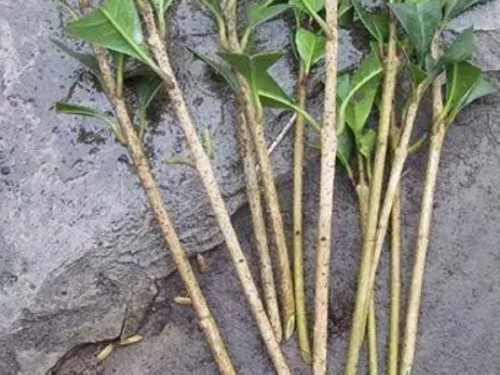
From June to August, select semi-lignified branches from camellia plants that have just finished flowering, cut them into cuttings 10-20 cm long, keep 2-3 leaves at the top of each cutting, retain one half of each leaf, remove the remaining leaves from the base of the petiole, and cut the lower end into a horseshoe shape.
2. Water propagation
Tie 10-20 cuttings into a bundle with the lower cuts aligned, place them in a jar filled with one third water, put the jar in a semi-shaded place, and soak in water for one or two days.
3. Cutting
When callus tissue grows at the lower cut of the cuttings, carry out the cutting. Use pure fine river sand as the cutting medium, put it in a flower pot, and insert the cuttings to a moderate depth.
[Later care]
1. Camellia is a light-loving plant. As with soil cultivation, it is only necessary to avoid strong summer sunlight; in other seasons it needs good light.
2. A prepared nutrient solution should be added to the water. During the vegetative growth period, nitrogen and potassium should be the main nutrients, while during the flower bud differentiation period, phosphorus and potassium should be the main nutrients.
3. There is no need to change the water too frequently, but each time you change the water you must rinse the root system and remove the mucus sticking to the roots. Also clean the vase used for water propagation, and it is best to disinfect it once with a 800-fold dilution of potassium permanganate.
4. The water level should not be too deep; it is enough for about 2/3 of the root system to be in the water. If it has been converted from soil cultivation to water cultivation, do not put the root system into the water at first; simply add pebbles to the tray on the upper part of the bottle to fix the roots, let the water vapor in the bottle rise to moisten them, and spray water on the roots and pebbles every day.
5. The bottle used for water propagation should not be too small; it is best if it is also slightly deeper. The water temperature should not differ too much each time you change the water.