How to Propagate Nasturtium? A Detailed Guide to Common Propagation Methods
Nasturtium (Tropaeolum majus) is a perennial trailing herbaceous flowering plant in the family Tropaeolaceae, genus Tropaeolum. The stem is fleshy and hollow, light grayish-green, with alternate simple leaves and long petioles, peltate and circular with entire, wavy margins. Flowers are borne terminally on slender, zygomorphic peduncles that emerge from the leaf axils, in yellow, red, orange, purple, creamy white, and bicolor. The fruit is pale whitish-green, with a surface marked by many ridges, and the seeds are large. The main varieties include upright dwarf types and double-flowered types. It usually blooms in summer and autumn. Because the lower and middle leaves of older plants age and turn yellow layer by layer each year but do not drop off and do not affect the plant's appearance, it is mostly grown as an annual or biennial herbaceous flower; under greenhouse cultivation it can bloom year-round.
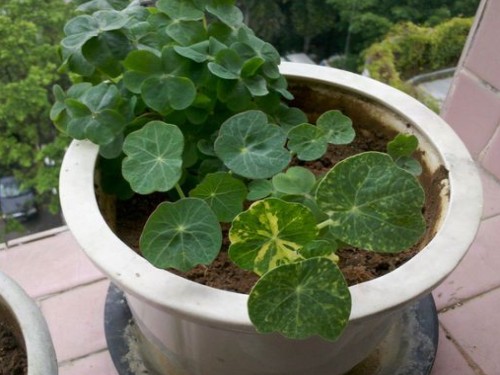
Nasturtium has always been valued for its plump leaves and beautiful flowers, with especially distinctive flower colors that look brilliant and spectacular when in bloom. That is why many people like to grow nasturtium in pots, placing them on home balconies, windowsills, and similar spots, where they create a very nice decorative effect. Below, we will walk you through the propagation methods for nasturtium.
Nasturtium is mostly propagated by seed sowing and by cuttings.
1. Seed propagation:
Seed propagation of nasturtium is generally carried out in a greenhouse from August to October. Before sowing, soak the seeds in warm water at 40-45°C for 24 hours. After sowing, maintain 18-20°C, and seedlings will emerge in 7-10 days. Plant them out into pots in May of the following year. The details are as follows:
It can be done in both spring and autumn. Before sowing, soak the seeds in warm water for 1 day, then remove them and dry them slightly. Sow them in soil mixed with sieved fine soil and rice-hull ash at a ratio of 2:1. The suitable temperature for sowing is 18-23°C, and seedlings will emerge in about 1 week. When 3 true leaves have grown, they can be transplanted at a spacing of 10 cm, and one month later they can be planted out into 18 cm pots. For the potting soil, you can use a loam mixed with 3 parts garden soil, 2 parts decomposed wood shavings or vinegar residue, 1 part rice-hull ash, and 0.5 part chicken manure or oil-cake fertilizer residue.
2. Cutting propagation:
Nasturtium cuttings are generally taken from April to June. Select tender stems as cuttings, remove the lower leaves, provide shade after inserting, and maintain humidity; roots will form in 2-3 weeks. As the stems and vines grow, set up supports with bamboo strips in good time and tie the branches and vines to them. Apply fertilizer once every 10-15 days, and maintain sufficient water and relatively high air humidity throughout the entire growth period.
Alternatively, from June to July, take the top shoots of the plant and insert them into a loam made of half garden soil and half rice-hull ash. Water thoroughly, provide shade, and maintain ventilation and air humidity. Roots will form after 2-3 weeks, and after 40 days they can be planted out.
Notes:
1. Seed propagation of nasturtium can be divided into spring sowing and autumn sowing. Spring-sown nasturtium has broader leaves, longer stem nodes, fewer flowers than autumn-sown plants, a shorter blooming period for each individual flower, and fewer and smaller seeds. Autumn-sown nasturtium, by contrast, has thicker leaves, sturdier branches, a more compact plant shape, shorter stem nodes, more flowers, a longer blooming period for each individual flower, and plump seeds. Therefore, to keep plants robust, be sure to sow seeds harvested from autumn sowing.
2. For beginners growing nasturtium, transplanting and planting out can easily become a "killer." Here is a method: first put less than half the soil into an 18 cm pot, then sow the pre-sprouted seeds that have just revealed the tip of the sprout into the soil. After the cotyledons open, add 1 cm of soil; after true leaves grow, add another 1 cm of soil; thereafter gradually fill in soil until it reaches the shoulder of the plant. This can both prevent lodging caused by leggy growth and help control water and fertilizer.
Each nasturtium flower has 8 stamens and 1 pistil, and the 8 stamens do not mature at the same time. Only after all the pollen has been shed does the pistil mature and extend to the flared opening of the flower.