How to Water Bonsai? A Complete Guide to the Correct Methods and Techniques
The most complicated step in caring for bonsai is watering it properly. How often a tree needs water depends on several factors, such as tree species, tree size, pot size, season, soil composition and climate. Therefore, it is basically impossible to state the correct frequency. However, after understanding the following basic guidelines, you will be able to observe when your trees need water, how to water them, and how much water to give.
In bonsai care and management, watering is a routine task and the one requiring the most skill. For different plants, different types of bonsai and different kinds of soil, the number of waterings and the amount of water must differ.
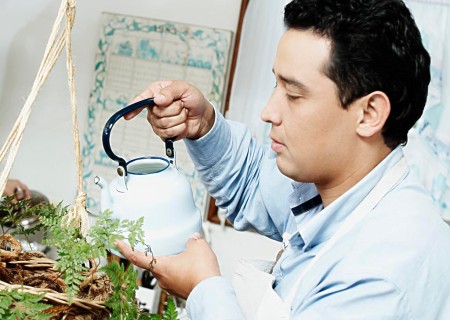
1. When to Water
When should you water? The time of day is actually not too important, but try to avoid watering in the afternoon, because the soil temperature rises after being exposed to sunlight and then cools rapidly when it comes into contact with cold water. Water the tree when the soil is slightly dry. This means you should not water while the soil is still moist, but only when the soil is slightly dry. You can check by inserting your finger about one centimeter (0.4 inch) into the soil. As you keep gaining experience, you will be able to tell by visual observation (rather than by touch) when a tree needs water.
2. How to Water
How should you water? As mentioned above, you should water the tree only when the soil is slightly dry. When the tree needs water, the roots must be thoroughly soaked and kept moist. To achieve this, keep watering until water seeps out of the drainage holes, then repeat the process ten minutes later.
Use a watering can with a fine spout and water from above the tree to avoid washing away the soil. Collected rainwater works even better because it contains no added chemicals, but when rainwater is not easy to collect, ordinary tap water is fine too. Be careful not to water on a fixed schedule; instead, you need to develop the habit of observing each tree rather than watering every day.
1) Bottom-watering method
Put 3-5 cm of water in a basin, place the pot in it, and let the water moisten the soil through the bottom of the pot. This helps prevent the soil from becoming compacted and promotes root development. When soaking the bonsai, the water level should be below the rim of the pot; take the pot out when the surface soil looks moist.
2) Sand-column method
When potting or repotting a plant, first stand several hollow tubes (such as bamboo tubes or iron pipes) upright in the empty pot, then fill in soil and firm it down, next fill the tubes with coarse sand, and finally pull out the hollow tubes, forming sand columns in the pot. When you water afterward, the water spreads outward only through the sand columns, which can prevent the soil from becoming compacted.
3) Fiber water-absorption method
You can bury a strip of cloth or a fiber wick in the pot, place one end of the cloth or wick in the water in the saucer, and use the capillary water-absorption effect of the cloth or wick to draw water from the saucer into the pot, keeping the potting soil moist. This method can be used when the owner is away for several days and no one is available to water.
4) Misting method
The air humidity a plant needs is by no means the same as its requirement for soil moisture. If the air humidity is insufficient, especially when the environment where the bonsai is kept is too dry, the plant's appearance will not be fresh and bright, and new branches and leaves will lack vitality. Therefore, it is necessary to mist the leaves and branches frequently. If you regularly mist the place where the bonsai is kept to increase the humidity of the microclimate, it is very beneficial to bonsai care.
3. Watering Frequency
Bonsai should use a suitable soil mixture, and soil composition has a profound effect on how often a tree needs watering. For most bonsai trees, a soil made up of akadama, pumice and compost (in a ratio of 2:1:1) works well. However, if you cannot water on time, you can use a soil mixture that retains moisture better (with a higher compost content).
As mentioned above, watering frequency depends on too many factors to produce an exact schedule. However, you need to learn to observe your own trees and understand when they need water. Following the basic guidelines above will, hopefully, help you water your bonsai correctly.
4. How Much to Water
Different plants need different amounts of water, so watering should vary from plant to plant. Common cacti, as well as plants such as aloe and sedum, have poorly developed root systems and should be watered sparingly. Some flowering plants have a dense layer of fine hairs on their leaves, such as begonia, gloxinia and calceolaria; these should not be misted on the leaf surface, otherwise the moisture evaporates with difficulty and they are prone to rot and disease.
There are also many flowering plants with small leaves and slow water evaporation that bloom more profusely only when watered less, such as crape myrtle, orange jasmine and Japanese bush cherry. In addition, flowering plants should be watered more during the peak growing season and the bud stage, and less during the flowering period. Newly pruned plants should be watered less, otherwise the branches and leaves will grow excessively and ruin the shape.