Can lemon trees be propagated from cuttings? A detailed guide to cutting propagation techniques
Citrus fruit seeds can all be used to make fresh indoor potted plants, such as lemon, orange and pomelo, though of course you need to know some basic growing skills. They usually take several years to bear fruit, so this requires a great deal of patience.
A potted lemon is also very ornamental, with its glossy emerald-green leaves and intensely fresh floral fragrance, a truly lovely potted green plant. The quickest and most direct way to propagate a lemon is by cuttings, and the method is very simple and easy to learn. Let us now take a look at how lemon cuttings should be done.
1. Cutting time
The most suitable time for cuttings is late May; September also works, but since autumn has already set in and the air humidity is very low, you need to pay attention to regulating moisture. If growers cover their lemon with plastic film, cuttings can also be taken in spring or winter.
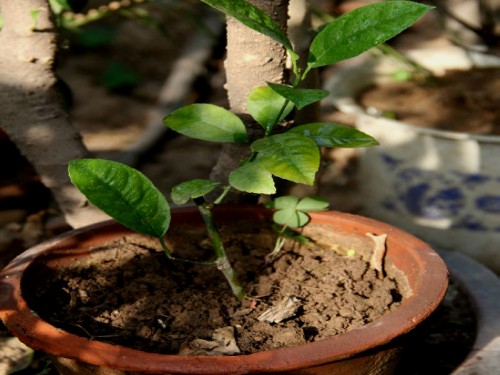
2. Choosing a container
You can choose a flower pot, or a disposable cup, or any other suitable container, but remember to make sure the bottom can drain water.
3. Cutting medium
The most suitable is nothing other than a sandy soil with good aeration and excellent drainage. The soil should be sterilized beforehand, but do not apply fertilizer.
4. Cutting stems
Cut mature, robust branches, about one year of growth or so; ones that are too young are no good, as they lack nutrients and rot easily. The cuttings should be about 15 cm long, then cut off most of the leaves on the branch, leaving only two or three at the tip.
5. Cutting method
Use a cotton swab to poke a small hole in the medium, then insert the branch into that hole, inserting about one or two nodes, and then fill the hole firmly with the medium.
6. Aftercare
After taking the cutting, water it, soaking it thoroughly; you can also sprinkle some water on the leaves, then place it in a semi-shaded spot, cover with plastic film, and keep the soil moist but not waterlogged, as overwatering may cause root rot. The temperature should be kept at around 25°C, and in about 40 days or so it will sprout; gradually expose it to light little by little, and move into normal care.
Compared with the "air layering method" and the "grafting method", lemon cuttings have a lower survival rate. If needed, carry them out in an environment of 15-25 degrees. So cutting propagation is more suitable for the two or three months around Qingming each year.
Before completing the cutting operation, first fill a flower pot with river sand (try to keep it free of mud) and keep the sand moist; being free of mud ensures that the cut lemon branch will not have soil microorganisms attached to it, preventing the fruiting branch from rotting and affecting the rooting rate. After preparing the sandy soil, use fruit shears to cut a strong branch at an angle; the part inserted into the sand should retain one node bud, while the part exposed above the sand should leave two to three node buds, and excess leaves should be cut off. Water three times a day, and strictly do not touch the branch during the root-growing period.
Generally, after about two months new leaves will emerge and roots will form at the base. Since the roots are still tender at this point, never pull up the fruit seedling when transplanting; use a small shovel to dig it out and move it outdoors for uniform, dense cultivation. Be careful to provide appropriate shade and keep the soil around the roots moist. Only once the roots are strong and several layers of leaves have grown can it be planted on its own.