How to Propagate Potted Chrysanthemums? A Detailed Guide to Common Propagation Methods
Chrysanthemum is a plant of the Asteraceae family, using its flower heads as medicine. It is a major commonly used traditional Chinese medicine, with the effects of dispelling wind and clearing heat, and soothing the liver and brightening the eyes. It mainly treats externally contracted wind-heat, dizziness and headache, and other conditions. Regularly drinking chrysanthemum tea has the benefits of relieving summer heat and irritability, and calming the mind and brightening the eyes. Chrysanthemum is cultivated throughout the country, among which the famous ones include Anhui's Boju, Zhejiang's Hangbaiju, Henan's Huaijuhua, and Hebei's Qijuhua, which are important export Chinese medicinal materials in China, sold far to Hong Kong, China, Macao, China and Taiwan, China. Chrysanthemum prefers a warm climate and a sunny environment, can tolerate cold, and fears waterlogging, but cannot lack water during the seedling and flowering stages. Chrysanthemum is a short-day plant and is very sensitive to day length. Only with no more than 10 hours of light per day can it form buds and bloom.
In the bonsai garden of Qingshan Park, chrysanthemum babies are growing vigorously, about to welcome the moment of blooming. What we usually see is the spectacular scene of chrysanthemums competing in beauty. Would you like to grow them yourself and witness the miracle from leaf to flower? You may first need to understand how plants reproduce.
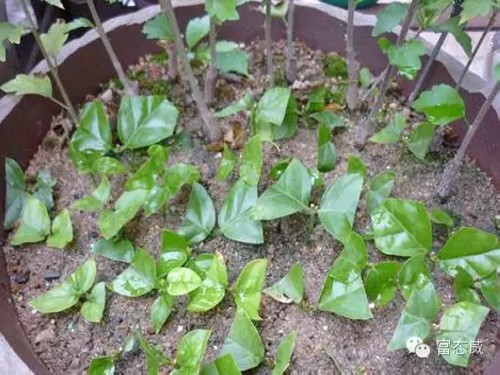
Chrysanthemum propagation has two methods: vegetative propagation and seed propagation. Vegetative propagation includes cuttings, division, grafting, layering and tissue culture, etc. Usually cutting propagation is the main method, which is further divided into bud cuttings, softwood cuttings and leaf-bud cuttings.
Division propagation:
For division propagation, in the field where chrysanthemums are harvested, cover the selected seed chrysanthemum roots with fertilizer to keep them warm through the winter, preventing freezing damage from affecting the survival rate. From April 20 of the following year to mid-May, when new shoots emerge, division and transplanting can be carried out. When dividing, dig out the entire chrysanthemum root, gently shake off the soil, then separate along the chrysanthemum seedlings. Each seedling should have white roots. Cut off excessively long roots and the tops of the seedlings, keeping roots at 6-7 cm and aboveground parts at 16 cm. Dig holes at a spacing of 40 cm × 30 cm, and plant 1-2 plants per hole.
Cutting propagation:
For cutting propagation, the timing of cuttings is determined according to variety characteristics and local climate conditions. Take healthy new shoots free of pests and diseases as cuttings. The cuttings should be 10-13 cm long. The seedbed land should be level, with an optimum temperature of 15-18 degrees C, and the soil should not be too dry or too wet. When cutting, first remove all the leaves within 5-7 cm of the lower end of the cutting, keep the upper leaves, and insert the cutting into the soil to a depth of 5-7 cm. Leave about 3 cm of the top exposed above the soil surface, water thoroughly, and cover with a layer of straw. Roots form in about 20 days.
1. Bud cuttings
In autumn and winter, cut off the outer basal shoots of the plant for cuttings. The standard for selecting buds is that they are relatively far from the plant and the buds are plump. After selecting the buds, peel off the lower leaves, and insert them at a plant spacing of 3-4 cm and a row spacing of 4-5 cm into flower pots or coarse sand in cutting beds in a greenhouse or plastic tunnel, maintaining a room temperature of 7-8 degrees C, and plant outdoors after the weather warms in spring. Softwood cuttings: this method is the most widely used. Mostly carried out from April to May. Cut 8-10 cm softwood shoots as cuttings, and manage them well after insertion. At a temperature of 18-21 degrees C, most varieties root in about 3 weeks, and in about 4 weeks the seedlings can be moved and potted.
2. Field cuttings
The medium can be garden soil mixed with 1/3 rice husk ash. Build a reed curtain shed on a high bed for shade. For a fully exposed cutting bed, if there is automatic misting equipment, no shade is needed. Leaf-bud cuttings: cut 1 leaf with an axillary bud from the branch and insert it. This method is only used for propagating rare varieties. Division: generally around Qingming, dig out the plant, separate it along the natural form of the roots with roots attached, and plant separately in pots.
Layering propagation:
Layering propagation is carried out on rainy days. The first time is around Xiaoshu (early July). First press the chrysanthemum branches down, cover them firmly with wet mud every 10 cm, and remove the tips so that new branches emerge from the leaf axils of the tips. The second time is around Dashu (late July). Press down the newly grown shoots in the same way as the first time, and apply one topdressing of decomposed human manure and urine, and pinch the tips around Chushu (late August).
Tissue culture:
Using tissue culture technology to propagate chrysanthemums has the advantages of requiring little material, producing a large number of seedlings, being virus-free, disease-free, and maintaining the excellent characteristics of the variety. The medium is MS + 6BA = (6-benzyladenine) 1 mg/L + NAA (naphthaleneacetic acid) 0.2 mg/L, pH 5.8. Use chrysanthemum stem tips (0.3-0.5 mm), tender stems or flower buds (9-10 mm in diameter), cut into 0.5 cm small segments, and inoculate. Room temperature 26 degrees C plus or minus 1 degree C, with 8 hours of additional light daily (1000-1500 lux). After 1-2 months, callus tissue can be induced. After another 1-2 months, green shoots and buds differentiate. Then transfer the differentiated green buds to White + NAA 1-2 mg/L medium, and after about 1 month, robust roots can be induced. After another 1 month of culture, they can be planted outdoors. Water with half the amount of the original culture solution. This is the key to the success of test-tube plantlets.
Grafting propagation:
To make chrysanthemums grow strong and to create "Shiyangjin" or large standard chrysanthemums, Artemisia annua or Artemisia apiacea can be used as rootstock for grafting. Collect Artemisia seeds in late autumn, sow in a greenhouse in winter, or raise seedlings in a hotbed in March. In late April, when the seedlings are 3-4 cm tall, move them into pots or the field, and carry out cleft grafting on sunny days. Layering: this method is used only when propagating bud sport parts.
Seed propagation:
Chrysanthemum seeds germinate slowly above 100 degrees C, with an optimum temperature of 25 degrees C. Sow thinly from February to April. Under normal conditions, most can bloom in the same year.