How to divide a potted spider plant? Methods and steps for propagation by division
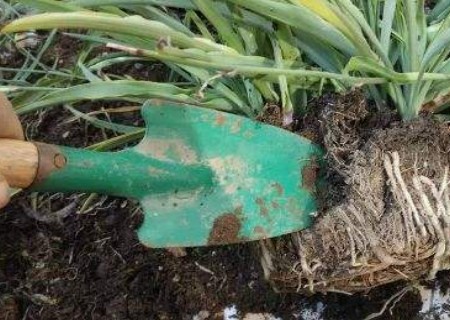
Potted flowers that can be propagated by division are mainly perennial evergreen herbaceous flowers. Among these flowers, some rely on creeping underground stems that keep extending, causing the clumps to continuously expand. When dividing, first take the mother plant out of the flower pot, shake off the outer soil, and use a sharp knife or pruning shears to cut apart the underground stems connecting the leaf clusters, and then they can be divided into several plants for separate planting.
Orchids are one of the ten famous precious flowers in China. Their extraordinary refinement and elegant temperament have been praised, enchanted, admired, and loved by celebrated figures and ordinary people at home and abroad. Nowadays, potted orchids entering ordinary households has gradually become a trend. Below, let me introduce the division propagation method for spider plants.
I. Division time
When the potting medium in a spider plant pot has been used too long and aged, or there are too many plantlets with no space to grow, division or repotting must be carried out. Generally speaking, spring and autumn are the most suitable times for division. At this time, the orchid plants are at their mature stage, and the damage rate can be reduced to the minimum. In the first half of the year, it is best from the Spring Equinox to Grain Rain. At this time, the flowering period has ended, the leaf buds have not yet sprouted, and they are not easily damaged by freezing, so repotting can be done at the right time.
In the second half of the year, it is best from the Autumn Equinox to Frost's Descent. The spider plant will enter a dormant state. Repotting at this time will have less impact on the growth of the spider plant. After resting and recovering through winter and accumulating nutrients, it will be able to flower and sprout well in spring. Mastering the timing of orchid division propagation is also an important part of caring well for spider plants.
II. Preparation for dividing the pot
Before dividing the pot, withhold water for anywhere from 1 week to half a month, depending on the dryness and moisture level of the orchid potting medium. For this Cymbidium ensifolium, I withheld water for exactly 1 month. The purpose of withholding water is to reduce the water content in the orchid roots, making them whitish and soft, so they are not easily broken during pot division. Orchid roots are fleshy roots and break easily when they have absorbed enough water.
III. Division method
1. Lifting the plant: For a potted orchid that has already filled the pot, do not forcibly pull it out when removing it from the pot, otherwise the damage to the orchid plant will be too great, either breaking the leaves or breaking too many roots. Therefore, the orchid pot should be broken without hesitation, and the orchid plantlets taken out. Then shake off the substrate in the root ball and divide into clusters. If the substrate is compacted or sticky, it can only be washed apart with water before dividing into clusters. If the potted orchid has not yet filled the pot, you can use your fingers to scrape away the substrate on the surface of the pot, tap the sides of the orchid pot several times with force, then use a wooden stick to push up and loosen the substrate from the hole in the bottom of the pot, then hold the rim of the pot with both hands, clamp the orchid plant and pot with your fingers, turn the orchid pot half-suspended and upside down, and shake it, and the orchid plantlets can be poured out.
2. Washing roots and drying roots: It is best to rinse the roots with tap water. Soaking and washing can easily spread fungal diseases. After the substrate is washed off, spread the orchid plant in sunlight, cover the orchid leaves with a shade net, and turn and sun-dry the orchid roots for 2 to 3 hours, making the orchid roots soft and tough, which is beneficial for division.
3. Division: Because orchid plants like to grow in clusters, they should be separated according to their habit, using two-generation or three-generation connected plants as units.
4. Cleaning debris and disinfecting: When carrying out division propagation, cut off withered leaf tips and leaf stalks, and the wounds can be smeared and disinfected with carbendazim or thiophanate-methyl fungicides.
Spider plants have strong adaptability and a high survival rate, and propagation by division is relatively easy. You can cut off the clustered stems and leaves of the stolons (this is a new young plant, with leaves above and roots below), and directly plant it into a flower pot for cultivation. Newly planted plants should be placed in a shaded place, avoiding direct sunlight. After dividing and potting, water once thoroughly, then move to a shaded place for care for a few days, frequently spraying water around to prevent wilting. The potting soil should not be too wet, otherwise the wounds on the root system are prone to rot. After new leaves grow, it indicates that new roots have already formed, and at this point it can be moved to normal care.
Precautions:
1. Do not water before division, to make the work easier.
2. Judge before division.
① First confirm that the new plant has grown roots. This can be judged by whether the plant has grown new buds.
② Before division, the potting soil should be kept dry to make the work easier.
③ Avoid dividing during the flowering period, so as not to affect flowering. It should be done after flowering.
④ Division is not suitable at temperatures that are too cold or too hot, so as to avoid cold damage or water evaporation, which can lead to dehydration and death.
3. New soil should be used for division, to avoid bacterial infection.
Disinfection methods include soaking in potassium permanganate for 5 to 10 minutes, soaking in 100-degree boiling water, exposure to sunlight, or high-temperature disinfection.