How to grow potted strawberries from seed? A detailed guide to sowing and raising seedlings
In theory, strawberries are not well suited to being grown from seed, because this can cause certain desirable traits to deteriorate. Home growers may not care that much, so this article takes gardening friends through how to sow strawberry seeds, in the hope that readers will gain something from it.
Strawberry seeds are quite small, so sowing must be done carefully. It is best to use seedling soil with a seedling tray, or seedling plugs with a seedling box. Those who really do not have these conditions can use sieved fine sandy loam mixed with some finer humus soil, fill it into a flower pot, and sow in the pot.
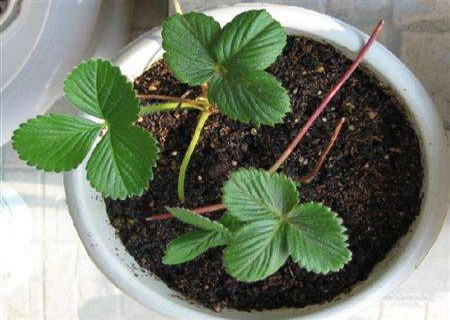
1. Strawberry seed treatment
1) First pour the seeds into warm water at 60-70°C and soak and wash them, stirring constantly, until the water temperature drops to about 25°C and then stop. Continue soaking for 2-3 hours, then scoop them out and rub them with your hands until the seed coats are clean and glossy. Then rinse them clean with clear water and cover them with several layers of wet gauze.
2) Keep them at 25-30°C for germination. Moisten the gauze with warm water three times a day (morning, noon and evening) to keep the seeds in a moist environment. Once 60-70% of the seeds have sprouted white, they can be sown.
2. Preparing the seedling pot
For pot growing, it is best to choose a ceramic pot with a diameter of 20-30 cm. Use soil with a relatively high humus content for the pot.
3. Sowing method
1) Before sowing, spray with water until thoroughly wet. After broadcast sowing, cover with about 0.5 cm of sieved fine soil, cover the pot with plastic film, and spray water daily with a fine-nozzle watering can to keep the soil moist. At a temperature of 25°C, seedlings will begin to emerge 15 days after sowing. When the seedlings grow 2 true leaves, divide them into separate pots, and when they have 4-5 leaves, they can be planted in the ground.
2) Before sowing, first flood the seedbed with a small amount of water, then rake the bed surface level. When the water in the bed has seeped down, the seeds can be sown. Strawberry seeds are small, so broadcast sowing is best.
3) The sowing rate is suitably 2.5-4.5 grams per square meter. Immediately after broadcast sowing, evenly scatter the prepared covering soil over the bed surface. A covering thickness of 0.3-0.5 cm is suitable, and use straw mats for shade, removing them once the seedlings have emerged uniformly.
4. Care and management
If you have a greenhouse at home, you can move the strawberries into the greenhouse, which is even better. Strawberries will also be more likely to bear fruit. After the strawberry fruiting period is over, you can move them out of the greenhouse and leave them outdoors to overwinter. In a way, if the strawberry plants experience some frost, it is even more helpful for increasing yields the following year.
Strawberries are very easy plants to grow and can be transplanted. Sometimes you may notice yellow leaves on the plants, but do not worry, just remove them. In winter, you can keep the yellow leaves until new leaves grow out the following spring, then remove the dead yellow leaves, and pay attention to watering, weeding and pest control.
You can also grow strawberries in plant bags, but be sure to water evenly and prevent birds from pecking at the strawberries and insect damage. The soil in plant bags dries out easily, so check frequently to keep the soil moist.