A Detailed Guide to Using Nutrient Solutions for Hydroponic Plants
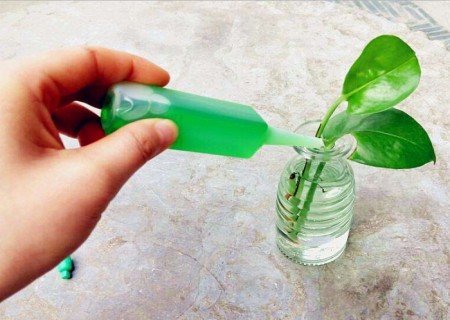
Flowering plants need large amounts of nutrients for growth and blooming, so a nutrient solution must be added to the water to meet the needs of plant growth and flowering. Nutrient solutions can be purchased at specialist hydroponic flower shops, chosen according to the flower variety you intend to grow. When using it, however, you must strictly follow the dilution ratio on the instructions, and follow the principle of keeping it dilute and applying it frequently. Generally, the nutrient solution can be added when changing the water; if the demand is high or the interval between water changes is long, it can also be added as a top-up in between. Use tap water that has been left standing for one or two days to mix the nutrient solution; if conditions allow, purified water is even better for mixing it.
Quite a few plants are suitable for hydroponics, mainly various foliage plants. For example: in the Araceae family, clumping Xanthosoma, Alocasia, Anthurium, Aglaonema, Monstera, Philodendron, Aglaonema 'Silver Queen', and Syngonium; in the Commelinaceae family, Calathea and Tradescantia; in the Liliaceae family, Aloe, spider plant, and variegated Aglaonema; in the Crassulaceae family, Aeonium and Sedum; and in other families, clivia, Paphiopedilum, Christmas cactus, lucky bamboo, Tillandsia, dusty miller, Dracaena fragrans, English ivy, and Pilea, among more than a hundred species.
The hydroponic flower nutrient solution series can be divided into: hydroponic nutrient solution, hydroponic clivia nutrient solution, hydroponic cactus family plant nutrient solution, flower foliar fertilizer (Type A), flower foliar fertilizer (Type B), rooting nutrient solution, and seed-soaking nutrient solution.
Key points for using hydroponic plant nutrient solution:
1. The temperature, humidity, light and other requirements needed for the growth of each type of plant should be met according to the instructions.
2. Hydroponic flowers require a room temperature above 5°C and preferably below 30°C. They must not be exposed to blazing sun, to prevent the liquid from becoming too warm and damaging the roots.
3. Mixing the nutrient solution comes in two strengths: dilute and concentrated. Concentrated nutrient solution: dilute one packet in 1.25 liters of water, for use in spring and autumn and during vigorous growth periods. Dilute nutrient solution: dilute one packet in 2 liters of water, for use in winter and summer and as a transitional solution when moving plants from soil culture to hydroponics.
4. When moving a flower from soil culture to hydroponics, wash the roots clean, then immerse half of the root mass in the dilute nutrient solution as a transition. Never immerse the entire root mass in the nutrient solution, as this can affect root respiration. Adjust the liquid level according to the characteristics of the flower's roots; once new roots emerge, make sure the liquid level sits close to the tips of the new roots.
5. In the early stage of hydroponics, some flowers need to replace their roots; at this time, rotting of the old roots is normal. The rotten roots should be trimmed off promptly, the plant washed clean, the bottle washed and the solution changed, until the new roots grow normally. For clivia and cactus family plants without roots, when grown hydroponically their base should just touch the liquid surface; once new roots have grown out, lower the liquid level to 4/5 of the way down the roots.
6. For herbaceous plants with nodes, take a mature tip cutting, trim it, and place it directly in the hydroponic solution; it will grow new roots and become a new plant. Once the new roots have grown to 2-5 cm, raise half of the root mass above the liquid surface for hydroponic growing.
7. Hydroponic nutrient solution, hydroponic clivia nutrient solution and hydroponic cactus family plant nutrient solution are non-toxic and do not spoil, and can be left unchanged for a relatively long time. Once the nutrient solution has been absorbed and evaporated, you only need to top it up with freshly mixed nutrient solution.
8. Every 15 days, alternately spray the leaves with “flower foliar fertilizer (Type A) and flower foliar fertilizer (Type B)”; this keeps the leaves glossy green and the plants growing vigorously.
9. For rooted hydroponic flowers, rooting nutrient solution can also be used. Determine the soaking time according to how woody the roots are: generally, soak the roots of herbaceous plants for 10 to 30 minutes, and woody plants for 2 to 24 hours, then place them in dilute nutrient solution as a transition. Soaking seeds in seed-soaking nutrient solution can raise the germination rate, giving strong seedlings and rapid growth.
How to use hydroponic plant nutrient solution:
For plants such as Spathiphyllum 'Little Angel', Monstera deliciosa and Philodendron, new root growth after being placed in water is rather unusual: one or two weeks after being put in water, some white fluffy material can be seen on the main roots. This is the growing point of new roots; do not mistake it for a root disease and wipe these white patches off when changing the water, as this would hinder new root growth. Once the new roots have grown, a suitable amount of nutrient solution can be added for care.
Hydroponic plants generally grow less vigorously than those in growing medium, and their growth rate is much slower; this is all normal. Hydroponic plants are attractive and clean, and are mostly used in the home to decorate the interior, so slower growth is actually just right for maintaining their ornamental effect over the long term. Because hydroponic plants grow weakly, their care also differs somewhat. Their light requirements are relatively lower, so when caring for them you can place them in a slightly shadier spot than plants grown in growing medium under the same conditions. The new leaves and buds that hydroponic plants grow in a hydroponic environment will also be somewhat smaller and weaker; this can be improved by adding nutrient solution and applying foliar fertilizer. When applying foliar fertilizer, spray more on the undersides of the leaves; the large number of stomata on the undersides of the leaves is the main pathway for nutrient absorption.
Using hydroponic plant nutrient solution is rather troublesome; in many cases, plants grown hydroponically in plain water alone can still grow normally and maintain a good ornamental effect. However, some plants, when grown in plain water for a long time, tend to develop yellowing, thin new leaves and need nutrient solution added to improve their growth.
It is best to choose nutrient solution from a reputable manufacturer. The market often has products with no brand, no manufacturer and no quality certificate; their quality is poor and their formulations unreasonable, and some even have a strong ammonia smell. These products often contain too much ammonium nitrogen, which is not conducive to nutrient uptake by hydroponic plants. Some plants are very sensitive to changes in nutrient solution concentration, such as pothos and Alocasia, which, although very easy to grow hydroponically, readily develop root rot when the nutrient solution is frequently changed to a different concentration, or when plain water is switched to nutrient solution.
Therefore, when changing the nutrient solution, go from dilute to concentrated as much as possible, and keep the change in concentration at each change as small as possible.
Do not panic if hydroponic plants develop yellow leaves; carefully analyze the cause of the yellowing and you can effectively prevent it from happening. Plants that have just started hydroponics will develop some yellow leaves; this is normal, and you just need to remove the yellow leaves promptly. In northern winters with heating, you can also wash the roots and put the plant in water; when buying plants, take care not to let cold wind blow directly onto the leaves, otherwise a normally growing plant will develop leaves that dry out starting from the leaf margins while the center of the leaf is still green.
If water-soaked rotten patches appear on the leaf surface and gradually wither and yellow, this is mostly caused by root rot. Trim off the rotten roots promptly, keep the water clean, and shorten the interval between water changes to stimulate new root growth. When a plant's leaves turn yellow and its growth is unhealthy, move it into a larger container, fix it in place and do not move it easily. Once the new roots are growing normally, moving it into a container suitable for display is a very effective way to promote plant growth.
It is worth mentioning that when using nutrient solution, you should be aware of the unsuitability of certain plants for hydroponics:
Everyone must assume that plants growing by the water's edge are especially easy to grow hydroponically. In practice, growers have found that such plants can grow well in water for a period of time. But after a month, they often cannot adapt to the environment inside a container; their growth deteriorates and a large amount of root rot appears. For example: purple-stemmed taro, Alocasia and arrowhead all show similar phenomena. These plants originally live in environments that are generally flowing water. When first put in water they are quite adaptable, but after long periods of still hydroponic culture in a small container they cannot get the abundant oxygen of flowing water. Also, because their original roots are already well adapted to an aquatic environment, they actually have more difficulty growing the water roots suited to a hydroponic environment, which in turn brings out their unsuitability.
To handle this type of plant, you can leave a small portion of the roots above the water surface. In particular, be careful not to add nutrient solution to the water; this keeps them in a relatively good growing state. Also make sure they get more light; they are often only slightly shade-tolerant.